Table of Contents
Bi-Color Rose Meaning: Decoding the Symbolism of Petals with Two Distinct Hues
Roses have long reigned as the undisputed royalty of the botanical world, captivating poets, artists, and romantics for millennia. While single-colored blooms—such as a classic red for passionate love or a pristine white for purity—communicate clear, straightforward messages, the floral universe holds a mesmerizing secret for those seeking layered expression. Enter the realm of multi-toned blossoms. The exact bi-color rose meaning: decoding the symbolism of petals with two distinct hues offers a fascinating journey into nuance, contradiction, and artistic wonder. Whether created by nature’s genetic mutations, masterful selective breeding, or modern horticultural artistry, these complex flowers speak a sophisticated language all their own.
When a single stem bears petals kissed by two entirely different colors, traditional floral symbolism expands exponentially. Instead of a single emotion, the recipient is handed a narrative of duality—balance, unity, contrasting feelings, or evolving chapters in a relationship. In this comprehensive guide, we will explore the history, horticultural mechanics, and psychological impact of bi-color roses, breaking down how specific color combinations alter the traditional messages of standard roses.
The Horticultural and Artistic Roots of Bi-Color Roses
Before diving into the symbolic language of these striking blooms, it helps to understand how they come to be. Unlike standard monocolor varieties, bi-color roses feature distinct colorations on either the inner and outer surfaces of the petals, or a stark contrast between petal margins and the center. Varieties like ‘Double Delight’ showcase creamy white centers flushed with vibrant strawberry-red edges, while others feature contrasting reverse sides that create a dramatic color shift as the bud opens.
The pursuit of striking visual contrast has always driven horticulturalists. Just as modern flower enthusiasts marvel at the vibrant spectacle of the Rainbow Rose Meaning: Joy, Diversity, Celebration, and Modern Artistry, traditional breeders spent decades stabilizing genetic anomalies to produce predictable, high-contrast bi-colors. These botanical achievements allowed florists to craft arrangements that communicate complex psychological states, bridging the gap between contrasting emotional spectrums.
Decoding the Bi-Color Rose Meaning Across Popular Combinations
Because each hue carries its own entrenched symbolic history, combining two distinct shades on a single bloom creates an interplay of meanings. Below, we break down the most common bi-color configurations and the specific messages they convey in the language of flowers (floriography).
Red and White: Unity, Compromise, and Devotion
The combination of red and white holds immense historical weight, famously echoing the Wars of the Roses in English history where the House of Lancaster (red) and the House of York (white) clashed. Today, however, a bi-color rose featuring red and white petals signifies the ultimate union of opposites. Red represents burning passion, desire, and romantic love, while white signifies purity, innocence, and new beginnings. Together, they communicate a balanced relationship built on both physical attraction and emotional purity, making them exceptionally popular for modern weddings and milestone anniversaries.
Yellow and Red: Friendship Fusing into Romance
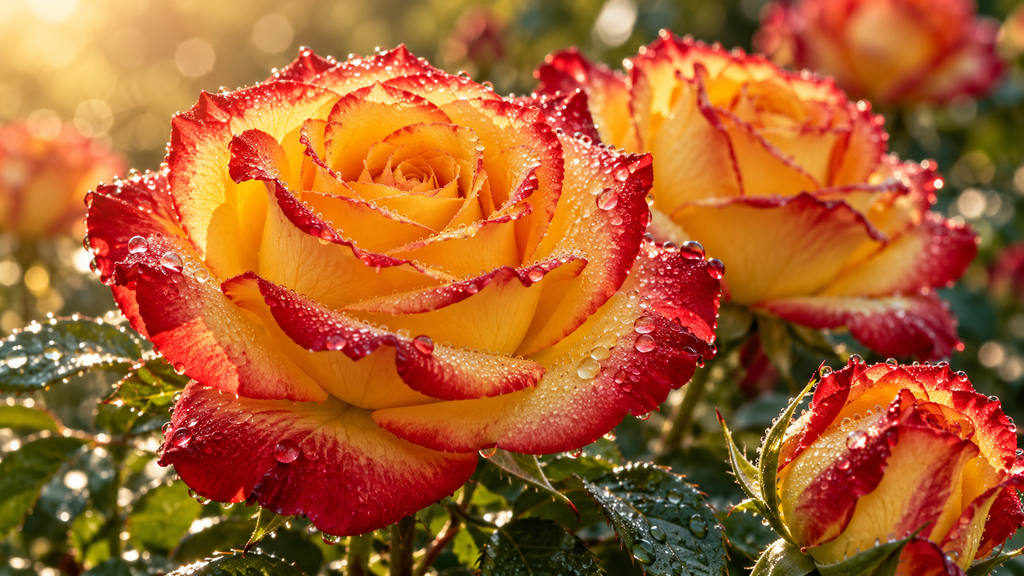
Few color combinations are as visually striking as a yellow rose tipped or splashed with fiery red. In traditional floriography, yellow represents platonic friendship, joy, and warmth. Red, of course, represents deep romantic love. When these two hues merge on a single blossom, the bi-color rose meaning shifts toward an exciting transition: the sparking of romantic feelings within an established friendship, or an acknowledgment that a bond has evolved from casual camaraderie into something much deeper and more passionate.
Pink and Yellow: Joyful Appreciation and Sweet Affection
Softer than the fiery drama of red-and-yellow pairings, pink and yellow bi-color roses exude a gentle, uplifting energy. Pink traditionally symbolizes grace, gratitude, and gentle admiration, while yellow radiates cheerfulness and platonic warmth. Presenting someone with pink-and-yellow bi-color roses communicates deep appreciation, joyful gratitude, and the celebration of a harmonious, happy connection.
Dark and Light Contrasts: Moody Elegance
When breeders cross deep, moody tones with lighter accents, the resulting blooms possess a dramatic, theatrical flair. For instance, pairing a rich, velvety shade reminiscent of a Burgundy Rose Meaning: Deep Passion, Unconscious Beauty, and Victorian Allure with a pale cream or blush reverse creates an aesthetic of profound depth. This juxtaposition suggests hidden layers of personality, intellectual complexity, and a beauty that requires time and patience to fully comprehend.
Comprehensive Guide to Bi-Color Rose Meanings and Occasions
To help you select the ideal arrangement for your next special occasion, the following data table outlines the primary bi-color pairings, their underlying symbolic meanings, and the best events for gifting them.
| Bi-Color Combination | Primary Symbolic Meaning | Emotional Subtext | Ideal Occasion |
|---|---|---|---|
| Red & White | Unity, balance, and eternal devotion | Combining passion with purity; coming together despite differences. | Weddings, milestone anniversaries, vow renewals |
| Yellow & Red | Friends-to-lovers transition | Platonic affection evolving into fiery romance. | Confessing feelings to a close friend, anniversaries of dating |
| Pink & Cream | Graceful elegance and admiration | Soothing affection, gratitude, and gentle charm. | Mother’s Day, graduations, expressing a quiet ‘thank you’ |
| Orange & Yellow | Enthusiasm, energy, and fascination | Exhilaration, creative synergy, and bright optimism. | New business ventures, birthdays, achievements |
| Peach & Pink | Modesty, gratitude, and sweetness | A nod to the modesty found in a Coral Rose Meaning and Symbolism: Modesty, Sympathy, and Emerging Romance, fused with pink’s gentle grace. | Housewarming, expressing sympathy, casual dating |
| Purple & Lavender | Enchantment and royalty at first sight | Deep fascination, unique individuality, and mystery. | Artistic collaborations, expressing deep intrigue, birthdays |
The Psychology of Duality in Floral Design
Human beings are naturally drawn to contrast. In art, literature, and nature, duality creates tension, interest, and emotional resonance. A mono-color bouquet makes a singular statement, but a bi-color rose tells a story. When you hand someone a bloom featuring two distinct hues, you are engaging in a subtle psychological communication.
Consider how different color pairings alter the mood of a room. Just as avant-garde gardeners sometimes experiment with unconventional palettes—drawing inspiration from the moody, dramatic edge found in the Black Rose Meaning: Myth, Mourning, Rebirth, and Gothic Romantic Symbolism—bi-color roses challenge the observer to look past the surface. They remind us that human relationships are rarely black-and-white; they are nuanced, multifaceted, and enriched by our differences.
How to Care for Bi-Color Roses to Preserve Their Vibrant Hues
Because bi-color roses often result from delicate horticultural breeding, maintaining their stunning visual contrast requires proper care and attention. Whether you received a bouquet or are growing them in a garden, follow these professional tips to keep their dual tones radiant:
- Optimal Hydration: Cut stem ends at a sharp 45-degree angle under clean water to prevent air bubbles from blocking water intake. Fresh water is vital to keep multi-toned petals crisp and prevent premature browning at the edges.
- Lighting Considerations: If growing bi-color roses outdoors, ensure they receive morning sun and afternoon shade. Intense, harsh afternoon sunlight can sometimes wash out delicate edge pigments, causing lighter tones to bleach or fade prematurely.
- Nutrient Balance: Use a balanced, slow-release fertilizer if growing them in soil. For cut flowers, use commercial floral preservatives to maintain cell turgor pressure, ensuring both the center and the outer margins of the petals develop fully.
- Ethylene Management: Keep cut bi-color arrangements away from ripening fruit, as ethylene gas accelerates aging and causes multi-colored petals to drop their contrasting borders quickly.
Conclusion: Embracing Complexity Through Flowers
The bi-color rose stands as a testament to nature’s capacity for surprise and beauty. By fusing two distinct hues onto a single blossom, these remarkable flowers transcend simple decoration to become profound symbols of balance, evolving relationships, and multifaceted human emotion. Whether you choose a red-and-white classic for a wedding altar, a yellow-and-red spark for a blossoming romance, or a moody blend of deep tones, understanding the bi-color rose meaning allows you to communicate sentiments that words alone often fail to capture. Embrace the duality, celebrate the contrast, and let your next floral gesture speak in vibrant, multi-toned harmony.