Table of Contents
20 Roses Meaning: Total Sincerity, My Feelings for You Will Never Falter
A bouquet of 20 roses carries an unusually complete and reassuring message: “My feelings for you are sincere, steadfast, and wholehearted.” It is generous without reaching the extravagance of several dozen blooms, making it especially effective when the giver wants to communicate serious affection with elegance and restraint. In modern floriography, 20 roses are most often associated with total sincerity, enduring devotion, and the promise that one’s feelings will not falter.
This interpretation draws upon several traditions rather than one ancient rulebook. Roses have represented love, beauty, secrecy, and devotion for thousands of years, while the practice of assigning precise messages to bouquet quantities is largely a modern extension of nineteenth-century flower language. Botanically, roses belong to the genus Rosa, a diverse group of woody perennials valued for layered petals, fragrance, thorns, and repeated flowering. Twenty individual stems amplify the rose’s inherent symbolism, transforming a familiar romantic flower into a deliberate declaration of emotional certainty.
The Essential Meaning of 20 Roses
The primary 20 roses meaning is total sincerity in love. The arrangement says that the giver’s emotions are genuine, dependable, and free from pretense. It can also mean, “Believe in my intentions,” “I am completely devoted to you,” or “My feelings remain as strong as ever.”
Two complementary ideas shape this message. The number two commonly evokes partnership, balance, and mutuality, while zero can suggest wholeness, continuity, or love without an obvious endpoint. Numerology should not be mistaken for a universal historical floral code, but this modern interpretation helps explain why 20 roses feel so appropriate for committed relationships. The bouquet also consists of two groups of ten, creating a visual impression of completeness doubled: one whole heart offered to another.
- Sincerity: The giver speaks honestly and without emotional games.
- Steadfast affection: Love remains reliable through change or difficulty.
- Commitment: The relationship is valued seriously rather than casually.
- Reassurance: The bouquet confirms feelings that may need to be spoken again.
- Complete admiration: Twenty blooms create a full, abundant tribute without appearing excessive.
Historical and Cultural Interpretations
In classical Greek and Roman culture, roses were associated with Aphrodite or Venus, linking the flower to desire, beauty, and divine love. Roses also acquired meanings of secrecy: the Latin expression sub rosa, “under the rose,” referred to confidential conversation. Although ancient societies did not leave a standardized meaning specifically for 20 stems, these older associations contribute sincerity, intimacy, and trust to the modern bouquet.
During the Victorian era, floriography allowed flowers to communicate sentiments constrained by social etiquette. Species, colors, placement, and presentation could all affect a bouquet’s message. Victorian flower dictionaries varied considerably, however, and strict numerical rose codes were not consistently recognized. The now-popular interpretation of 20 roses as complete sincerity developed through later florist traditions, particularly as numbered bouquets became fashionable for anniversaries, proposals, and ceremonial gifts.
In contemporary Western practice, 20 red roses usually signal devoted romantic love. Across parts of East Asia, flower quantities are often read with particular care, although meanings differ by country and community. Even numbers may suit romantic pairings in some contexts, while certain traditions prefer odd-numbered bouquets for celebrations. In Russia and several neighboring cultures, even-numbered flowers are strongly associated with funerals and memorial observances. A gift of 20 roses could therefore be inappropriate for a romantic occasion there. Local custom should always take precedence over an online numerical definition.
How Rose Color Changes the Message
Quantity establishes the bouquet’s framework, but color determines its emotional tone. Twenty red roses express unwavering romantic devotion, while softer shades can make the same number suitable for family, friends, mentors, or new relationships. Mixed colors can communicate emotional complexity, provided the palette feels intentional.
| Rose Color | Meaning in a 20-Rose Bouquet | Best Occasion |
|---|---|---|
| Red | Enduring passion and sincere romantic commitment | Anniversary, proposal, Valentine’s Day |
| Pale pink | Tender admiration, sweetness, and gentle gratitude | New romance, birthday, thank-you gift |
| White | Honesty, unity, remembrance, and pure intention | Wedding, reconciliation, memorial |
| Cream | Thoughtfulness, grace, and quiet devotion | Elegant celebration, host gift, milestone |
| Salmon or coral | Warm enthusiasm, desire, and affectionate friendship | Developing romance, congratulations |
| Yellow | Loyal friendship, happiness, and encouragement | Friendship, recovery, achievement |
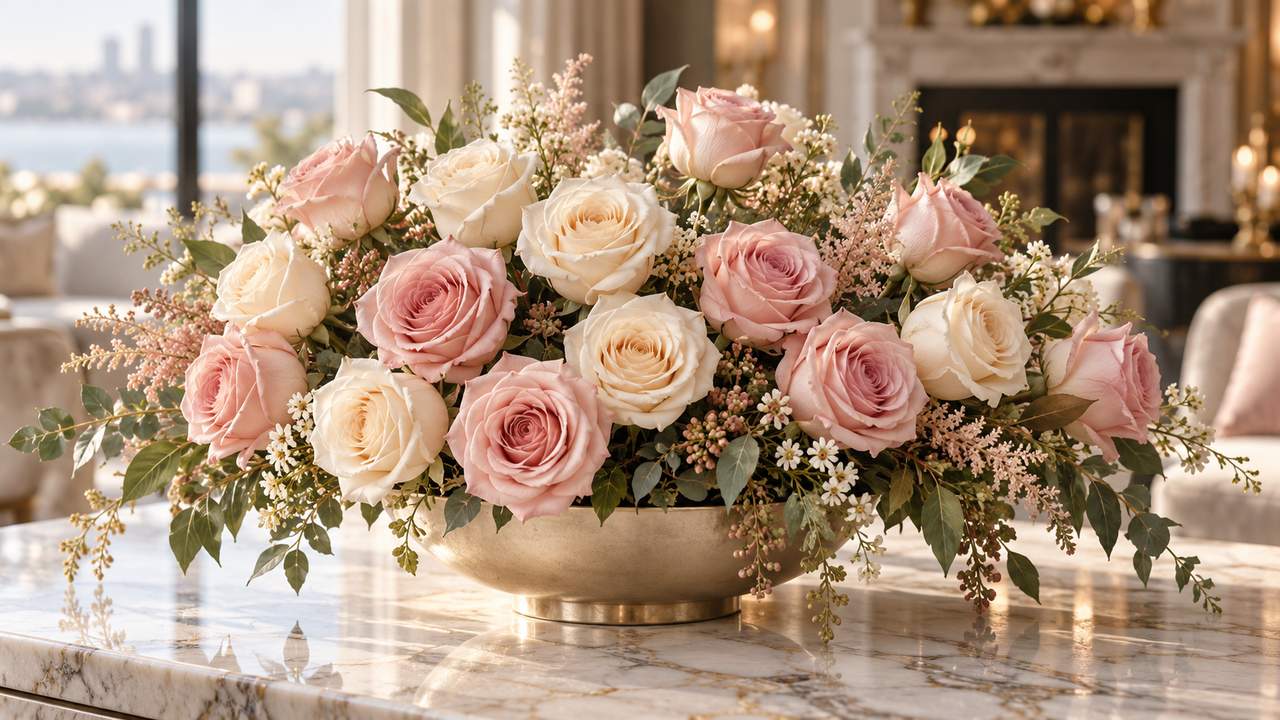
For a delicate declaration, pale pink roses soften the intensity of the number and emphasize admiration. Muted blush or mauve arrangements draw on the nostalgic romance associated with dusty rose colors. Ivory bouquets reflect refined cream rose symbolism, while coral-toned arrangements combine sincerity with the warmth explored in salmon rose meaning.
When and to Whom Should You Give 20 Roses?
Twenty roses are ideal for an established partner when celebrating an anniversary, renewing a promise, or offering reassurance during a demanding period. They also make a meaningful proposal bouquet because their symbolism emphasizes honest intentions rather than passion alone. For a twentieth anniversary or twentieth birthday, the number gains an additional literal significance.
The bouquet can be platonic when color and presentation make that intention clear. Yellow, peach, cream, or pink roses may honor a parent, close friend, mentor, graduate, or colleague. Red roses, especially long-stemmed varieties, are widely interpreted as romantic and should be avoided in professional relationships unless that message is welcome.
Modern etiquette favors clarity. Include a short card such as, “Twenty roses for a love that never falters,” or, in a non-romantic setting, “With sincere gratitude for everything you have done.” Consider allergies, fragrance sensitivity, workplace rules, pets, and cultural customs before arranging delivery. Avoid sending an imposing bouquet anonymously; mystery can feel uncomfortable rather than enchanting.
Companion Flowers and Bouquet Styling
Because 20 roses already create substantial volume, companion flowers should support rather than overwhelm them. For classic romance, combine red roses with restrained touches of Italian ruscus or salal. White lisianthus adds soft movement and echoes sincerity, while waxflower introduces delicate texture. Gypsophila creates an airy, traditional effect, though using it sparingly keeps the design contemporary.
For a garden-inspired bouquet, pair blush roses with sweet peas, ranunculus, or scented stock. Cream roses look sophisticated with white anemones, olive foliage, or eucalyptus. Yellow and salmon roses become livelier beside chamomile, snapdragons, or peach carnations. A tonal arrangement containing several shades of one color often looks more intentional than an assortment of unrelated hues.
Ask the florist to keep all 20 roses visually countable if the number itself matters. A hand-tied spiral bouquet feels intimate and natural; a low vase arrangement suits a dinner or home delivery; long stems wrapped simply in paper create formal drama. Avoid excessive plastic, glitter, dyed foliage, and strongly perfumed fillers that compete with the roses.
Care and Vase Longevity
Fresh cut roses commonly last five to ten days, while premium varieties may remain attractive longer under good conditions. Choose flowers with firm stems, healthy green sepals, and buds that are beginning to loosen. Very tight buds may never open, whereas fully expanded flowers provide less vase life.
- Wash the vase thoroughly to limit bacteria, then fill it with fresh lukewarm water and commercial flower food.
- Remove every leaf that would sit below the waterline.
- Recut 2 to 3 centimeters from each stem at a sharp angle with clean shears.
- Change the water every one or two days, cleaning the vase and recutting stems as needed.
- Keep the arrangement away from direct sun, heaters, drafts, and ripening fruit, which releases flower-aging ethylene gas.
If a rose droops prematurely, recut its stem and place it in deep, clean water for several hours. Gardeners cultivating roses for cutting should provide at least six hours of sun, fertile but well-drained soil, deep watering at the base, and good air circulation. Harvest in the cool morning when the outer petals have loosened but the bloom is not fully open.
A Promise Expressed in Flowers
The enduring appeal of 20 roses lies in the balance between abundance and restraint. Their message is not merely “I love you,” but “I mean what I say, and my feelings are steady.” Color, companions, presentation, and cultural context can shift the bouquet from passionate to grateful, nostalgic, celebratory, or consoling. Chosen thoughtfully and accompanied by clear words, 20 roses become a graceful botanical promise of total sincerity and affection that will not falter.