Table of Contents
25 Roses Meaning: Congratulations on a Milestone, Deep Joy, and Triumph
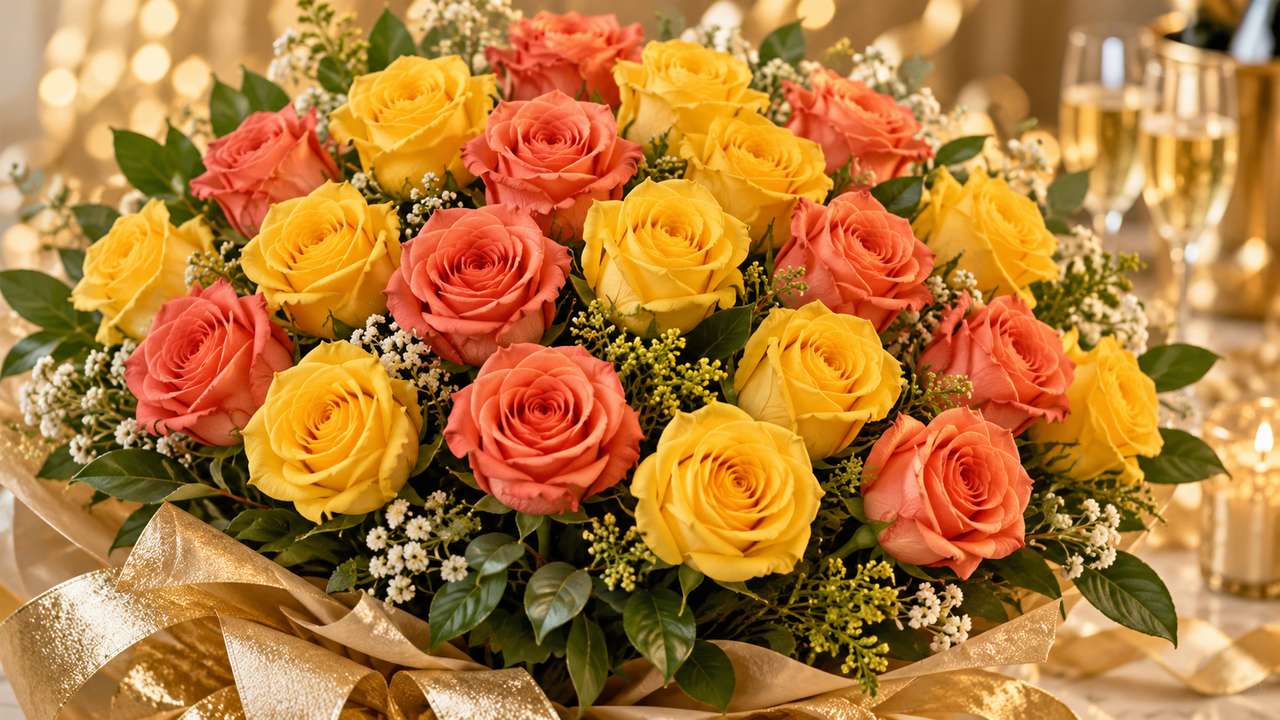
A bouquet of 25 roses is an exuberant floral declaration. Its most widely accepted message is “congratulations,” but it can also express deep joy, admiration, pride, and the happiness of seeing someone triumph. More abundant than a traditional dozen yet less formal than very large ceremonial arrangements, 25 roses feel generous, intentional, and unmistakably celebratory.
The symbolism combines centuries-old rose lore with the comparatively modern language of numbered bouquets. Roses have carried emotional meaning since antiquity: Greeks and Romans associated them with love, beauty, secrecy, victory, and divine favor, while medieval and Renaissance traditions connected them with purity, sacrifice, royal identity, and spiritual devotion. Victorian floriography later refined the meanings of rose colors, stages of bloom, and presentation. Fixed numerical interpretations became especially prominent through twentieth-century floristry and contemporary gift culture. Thus, the 25 roses meaning is not a single ancient rule but a living convention built from historical symbolism, commercial floristry, and modern social etiquette.
The Primary Meaning of 25 Roses
Twenty-five roses primarily say, “Congratulations on an achievement that deserves to be noticed.” They recognize not only an outcome but also the dedication, courage, or perseverance behind it. The bouquet’s fullness gives emotional weight to the gesture: this is not casual praise, but sincere acknowledgment of a meaningful success.
- Congratulations: The clearest interpretation, suitable for academic, professional, artistic, athletic, and personal accomplishments.
- Triumph: Roses traditionally evoke honor and distinction, making 25 stems appropriate after a difficult victory or long-awaited breakthrough.
- Deep joy: The abundant arrangement communicates happiness shared with the recipient rather than simple polite approval.
- Pride and admiration: It can say, “I see what you accomplished, and I am proud of you.”
- Good fortune: In modern celebratory floristry, 25 roses may convey wishes for continued success and a flourishing future.
The number itself also contributes to the bouquet’s character. Twenty-five is a quarter of one hundred, so it naturally suggests progress, completion, and a substantial landmark. It appears in silver anniversaries, quarter-century birthdays, years of service, and institutional commemorations. Although numerological interpretations vary, the number is commonly perceived as balanced, mature, and milestone-oriented.
Historical and Cultural Interpretations
In classical cultures, roses appeared in feasts, victory celebrations, religious rites, and elite ceremonies. Rose garlands could signify pleasure and honor, while the flower’s association with deities of love gave it an enduring emotional dimension. No surviving classical code assigns a universal meaning specifically to 25 stems, but the rose’s older links to celebration and distinction strongly support its modern congratulatory role.
Victorian flower dictionaries focused more often on color, species, and condition than bouquet count. A red rosebud, a fully opened white rose, and a yellow rose could carry very different implications. Modern florists subsequently combined these color traditions with numerical formulas, creating messages that are easier to select and present. Twenty-five roses consequently emerged as a luxurious expression of congratulations rather than a rigid historical cipher.
Cultural context still matters. In many Western settings, an odd number of flowers produces a natural-looking arrangement and is acceptable for joyful occasions. In parts of Europe, odd-numbered bouquets are also traditionally preferred for celebrations, although conventions vary by country and large bouquets may be treated differently. In East Asian gift culture, the color and sound associations of numbers may influence interpretation more than Western floriography. Because customs are regional rather than universal, the accompanying card should make the sender’s intention explicit.
How Rose Color Changes the Message
Color determines whether 25 roses feel romantic, friendly, refined, or ceremonial. A single-color bouquet delivers a focused message; a mixed palette creates a layered one.
| Rose color | Meaning in a 25-rose bouquet | Best occasion |
|---|---|---|
| Red | Passionate love, admiration, and romantic pride | Partner’s promotion, anniversary, or shared milestone |
| Pink | Joy, gratitude, grace, and affectionate congratulations | Graduation, performance, award, or personal success |
| Yellow | Friendship, optimism, warmth, and shared happiness | Friend’s new job, birthday, or recovery milestone |
| White | New beginnings, sincerity, dignity, and peaceful achievement | Wedding, retirement, ordination, or formal ceremony |
| Champagne | Elegance, understated luxury, and mature appreciation | Silver anniversary, executive promotion, or gala |
| Orange or coral | Energy, enthusiasm, confidence, and bold success | Business launch, competition win, or creative debut |
| Mixed colors | Multifaceted affection, communal joy, and inclusivity | Family celebration, team achievement, or major birthday |
For a platonic gift, yellow is especially expressive; a fuller understanding of yellow rose meaning helps distinguish cheerful affection from romance. White arrangements are dignified and versatile, though reading more about white rose symbolism is useful because white roses can signify both beginnings and remembrance. For polished celebrations, the subtle warmth described by champagne rose meaning makes ivory-beige blooms particularly sophisticated.
When and to Whom Should You Give 25 Roses?
Choose 25 roses when the accomplishment is significant enough to deserve a statement bouquet. They are ideal for a 25th birthday, silver wedding anniversary, graduation, promotion, retirement, successful performance, publication, business opening, sporting victory, citizenship ceremony, recovery milestone, or completion of a demanding project.
They can be given to a spouse or partner, but romance is not required. Parents may send them to a graduating child; colleagues may honor a respected leader; friends may celebrate a new beginning; and a team may present them to a coach, founder, or retiring mentor. For workplace gifts, use pink, yellow, white, champagne, or mixed roses unless a romantic relationship is already understood. Red roses—especially 25 of them—can easily imply passionate love.
Presentation etiquette is equally important. Deliver the flowers after the result is confirmed, preferably on the day of the announcement or celebration. Include a concise card naming the achievement: “Twenty-five roses for an extraordinary milestone—congratulations on your promotion.” A specific message prevents ambiguity and makes the symbolism personal.
Do not use a bright congratulatory bouquet when the occasion is primarily bereavement. White or muted roses can offer comfort, but condolence customs require a different tone and presentation; consult guidance on roses for sympathy before sending flowers to a funeral home or grieving household.
Companion Flowers and Styling
Because 25 standard roses already create substantial volume, companion flowers should support rather than overwhelm them. For romantic grandeur, add restrained stems of spray roses and deep green salal. For garden-style congratulations, combine blush roses with lisianthus, ranunculus, or delicate snapdragons. Yellow roses pair beautifully with white stock, feverfew, or blue delphinium, while champagne roses gain texture from ivory sweet peas, eucalyptus, and wisps of ornamental grass.
A compact, dome-shaped arrangement feels formal and luxurious. A loose, asymmetrical bouquet appears contemporary and artistic. Long stems wrapped in paper create a dramatic presentation, whereas a vase arrangement is more practical for an office, restaurant, hospital room, or public ceremony. Avoid strongly fragrant companions in healthcare settings, and check whether the recipient has pollen sensitivities or household pets.
Botanical Quality and Vase Care
Most florist roses are cultivated hybrids of the genus Rosa, selected for stem length, petal count, color, transport resilience, and vase life. Fresh roses should have firm stems, healthy green sepals, unblemished outer petals, and buds that yield slightly when gently pressed. Very hard buds may fail to open, while loose, soft heads may be near the end of their display life.
- Use a thoroughly clean vase and dissolve commercial flower food in fresh, lukewarm water.
- Remove every leaf that would sit below the waterline to reduce bacterial growth.
- Recut 1–2 centimeters from each stem at an angle with a clean, sharp knife or floral shears.
- Keep the bouquet away from direct sun, radiators, drafts, and ripening fruit, which releases aging-accelerating ethylene.
- Refresh the water every one to two days, wash the vase, and recut the stems as needed.
With good handling, quality cut roses commonly remain attractive for about seven to ten days, and some cultivars last longer. Remove fading blooms promptly so the rest of the arrangement retains its celebratory freshness.
A Bouquet of Earned Happiness
The enduring 25 roses meaning is joyful recognition: congratulations, triumph, admiration, and heartfelt pride gathered into one abundant bouquet. Color refines the message—red for romantic devotion, pink for graceful appreciation, yellow for friendship, white for dignified beginnings, and champagne for elegant celebration. Chosen with cultural awareness, styled thoughtfully, and accompanied by a clear personal note, 25 roses transform an important achievement into a memorable floral ceremony.