Table of Contents
33 Roses Meaning: I Love You with Great Passion and Overflowing Heart
The 33 roses meaning is most often expressed as “I love you with great passion” or “my heart overflows with love for you.” It is a lavish romantic declaration: more emphatic than a dozen roses, yet still intimate enough to feel personal rather than ceremonial. A bouquet of 33 roses communicates emotional abundance, enduring affection, admiration, and a desire to make love unmistakably visible.
This interpretation combines several traditions. Roses have represented love since antiquity, when Greek and Roman mythology associated them with Aphrodite and Venus. In Victorian floriography, rose color, condition, and presentation allowed people to convey feelings that social convention discouraged them from speaking aloud. The significance of exact bouquet numbers became especially elaborate in modern European and East Asian floristry. Although historical flower dictionaries did not assign one universal message to every number, contemporary florists commonly read 33 as an intensified form of the number three: affection expressed fully, repeatedly, and with heartfelt conviction.
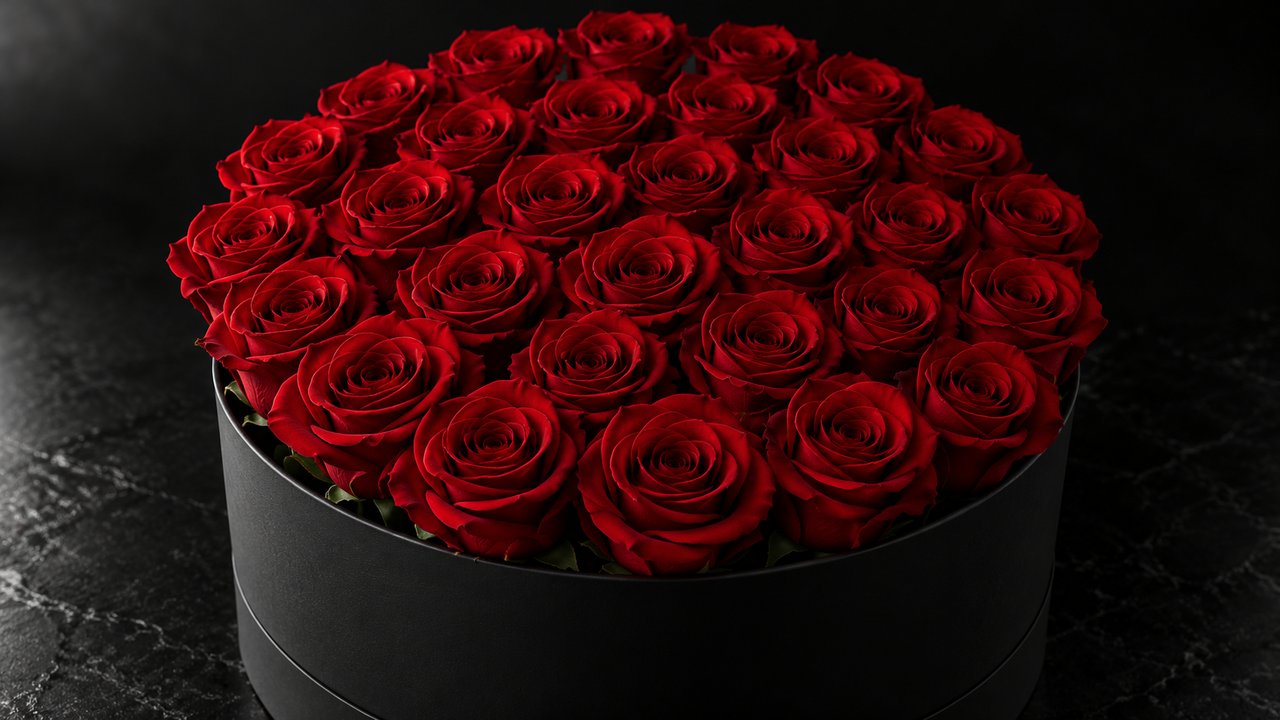
Botanically, the gift is equally impressive. Roses belong to the genus Rosa, a diverse group of shrubs and climbers whose layered petals, fragrance, thorns, and repeated flowering have inspired centuries of symbolic interpretation. Thirty-three blooms create substantial volume, making the bouquet itself a physical image of an overflowing heart.
The Primary Meaning of 33 Roses
At its core, 33 roses signify deep, passionate, and generous love. The number is large enough to suggest that the giver’s feelings cannot be contained in a modest arrangement. It may also imply devotion, romantic maturity, and gratitude for a relationship that has grown richer over time.
- Great passion: A direct declaration of powerful romantic attraction and emotional intensity.
- Overflowing love: The bouquet’s abundance symbolizes a heart filled beyond measure.
- Devotion: Repeated threes can suggest constancy, harmony, and a bond encompassing past, present, and future.
- Admiration: Thirty-three carefully chosen blooms honor the recipient as someone exceptional.
- Celebration of shared life: The number can mark years together, a significant date, or a meaningful personal milestone.
The symbolism of 33 grows naturally from the traditional association of three roses with the simple phrase “I love you.” Readers exploring the three roses meaning will recognize how multiplying that compact declaration creates a far more expansive statement. Eleven groups of three may poetically be understood as “I love you” repeated again and again.
Historical and Cultural Interpretations
In ancient Mediterranean cultures, roses represented beauty, desire, secrecy, and the fleeting nature of life. Romans scattered petals at banquets and used roses in rites connected with love and remembrance. Medieval Christianity gave the flower additional associations with spiritual love, sacrifice, and the Virgin Mary. During the Renaissance, painters and poets continued to use the rose as an emblem of both earthly passion and divine perfection.
The nineteenth-century language of flowers refined these ideas. Red roses declared love; white suggested innocence; pink conveyed admiration; and yellow could indicate jealousy, friendship, or remembrance depending on place and period. Bouquet composition mattered more than number alone. A rose offered upright expressed an affirmative sentiment, while a reversed flower could negate it.
Modern numbered-rose customs are particularly prominent in commercial floristry across China, Hong Kong, Singapore, and neighboring regions. There, number symbolism may influence how a bouquet is received. Three commonly echoes a declaration of love, while repeated threes reinforce sincerity and emotional completeness. In some spiritual or numerological readings, 33 is associated with compassion, generosity, and elevated love. Such meanings are modern interpretive layers rather than universal botanical or historical laws, so the recipient’s culture and personal beliefs should always take precedence.
| Rose Choice | Meaning in a 33-Rose Bouquet | Best Occasion |
|---|---|---|
| Red | Passionate love, desire, and commitment | Anniversary, proposal, or romantic declaration |
| Dark pink | Gratitude, admiration, and heartfelt appreciation | Milestone, thank-you, or partner celebration |
| White | Sincerity, unity, reverence, and new beginnings | Wedding, engagement, or spiritual milestone |
| Peach or blush | Gentle affection, warmth, and graceful sincerity | New romance or elegant birthday gift |
| Yellow | Joy, friendship, encouragement, and optimism | Friendship milestone or congratulations |
| Mixed colors | A layered relationship filled with love, joy, and gratitude | Long-term partnership or personal celebration |
How Color Changes the Message
Thirty-three red roses deliver the clearest statement of ardent love. Deep crimson feels dramatic and sensual, while brighter scarlet suggests energetic attraction. Pink softens the message toward tenderness and esteem. Darker pink varieties are especially appropriate when passion is joined by gratitude; understanding the dark pink rose meaning can help distinguish affectionate appreciation from an exclusively romantic declaration.
White roses transform the bouquet into a statement of faithful, sincere, or spiritual love. Red-and-white combinations traditionally symbolize unity, making them suitable for engagements and weddings. Peach and blush roses feel intimate without being overwhelming, whereas yellow roses are usually safest for friendship in contemporary Western etiquette. Lavender roses often signify enchantment or love at first sight. Very dark burgundy roses convey mature passion, but nearly black varieties can introduce associations with endings, mystery, or transformation.
When and to Whom Should You Give 33 Roses?
A 33-rose arrangement is best reserved for a relationship or occasion capable of carrying its emotional weight. It suits a spouse, fiancé or fiancée, established romantic partner, or someone with whom intentions are already clear. It can be breathtaking for a 33rd anniversary, a partner’s thirty-third birthday, Valentine’s Day, a proposal, or the renewal of wedding vows.
For a new romance, consider whether such abundance might feel flattering or pressuring. The bouquet is rarely appropriate as a first-date gift unless both people enjoy theatrical gestures and have already discussed their feelings. When offered to a friend, parent, mentor, or colleague, avoid red and choose pink, peach, white, or yellow flowers with a card explaining the intended gratitude or celebration.
Context is especially important in bereavement. A large white, cream, or soft-pink arrangement may express profound respect, but 33 red roses can appear romantic unless the deceased was the giver’s partner. Consult local customs and established guidance on roses for sympathy before sending an unusually large tribute.
Modern Etiquette for a Grand Bouquet
- Include a handwritten message so the recipient understands why you chose 33.
- Confirm that the recipient has enough vase space, particularly for delivery to an office or restaurant.
- Remove thorns from the lower stems, but avoid stripping the stems excessively, which can damage them.
- Choose an even dome, airy garden arrangement, or divided vase display rather than compressing all blooms tightly.
- Consider fragrance sensitivity; strongly scented garden roses can be magnificent but unsuitable for hospitals or small workplaces.
Companion Flowers and Styling
For classical romance, pair red roses with restrained accents of Italian ruscus, salal, or eucalyptus. White lisianthus and waxflower add movement without competing with the roses. Avoid excessive baby’s breath if you want a contemporary effect; tonal foliage and generous negative space often look more sophisticated.
For an English-garden arrangement, combine blush or apricot roses with sweet peas, scabiosa, astrantia, or seasonal clematis. Fragrant, many-petaled David Austin English roses lend romantic texture, although their softer petals may have a shorter vase life than standard hybrid tea roses. A monochromatic arrangement emphasizes the number and message, while a gradual blend from burgundy through red to blush suggests love deepening into tenderness.
Care and Vase Longevity
Choose roses with firm stems, fresh green sepals, and outer petals that feel resilient rather than papery. Slightly closed blooms generally last longer, although garden roses may naturally open into broad rosettes. Recut one to two centimeters from each stem at a 45-degree angle using a clean knife or sharp shears. Remove all foliage that would sit below the waterline.
Place the roses in a thoroughly cleaned vase filled with fresh water and commercial flower food. Keep them away from direct sunlight, radiators, drafts, and ripening fruit, which releases ethylene gas and accelerates aging. Change the water every one or two days, wash the vase, and recut the stems. Most florist roses last five to ten days; cool conditions, good hygiene, and a suitable cultivar may extend their beauty further.
An Abundant Declaration
The enduring 33 roses meaning is love expressed without reserve: passionate, generous, and overflowing. Its exact interpretation depends on color, relationship, cultural setting, and the words accompanying the flowers. Red makes the message ardently romantic; pink adds gratitude; white brings sincerity; and mixed palettes tell a more complex story. Chosen thoughtfully, styled with restraint, and presented with a personal note, 33 roses become more than an impressive bouquet—they become a memorable declaration that the recipient is deeply and abundantly loved.