Table of Contents
10 Roses Meaning: You Are Perfect in Every Way and Complete Approval
The widely recognized 10 roses meaning is “You are perfect in every way.” A bouquet of ten roses expresses complete admiration, wholehearted approval, and the sense that nothing is missing from the recipient or the relationship. Romantic without being as extravagant as a dozen, ten roses make a polished declaration: the giver sees the recipient as exceptional, complete, and deeply worthy of affection.
This interpretation belongs largely to the modern numerical language of roses. During the nineteenth-century flourishing of Western floriography, flower species, colors, and presentation methods carried elaborate messages, but fixed meanings for precise rose quantities were not always standardized. Florists and popular gift culture later developed a more consistent numerical vocabulary. Ten naturally became associated with perfection because decimal counting treats ten as a complete score—the familiar “ten out of ten.”
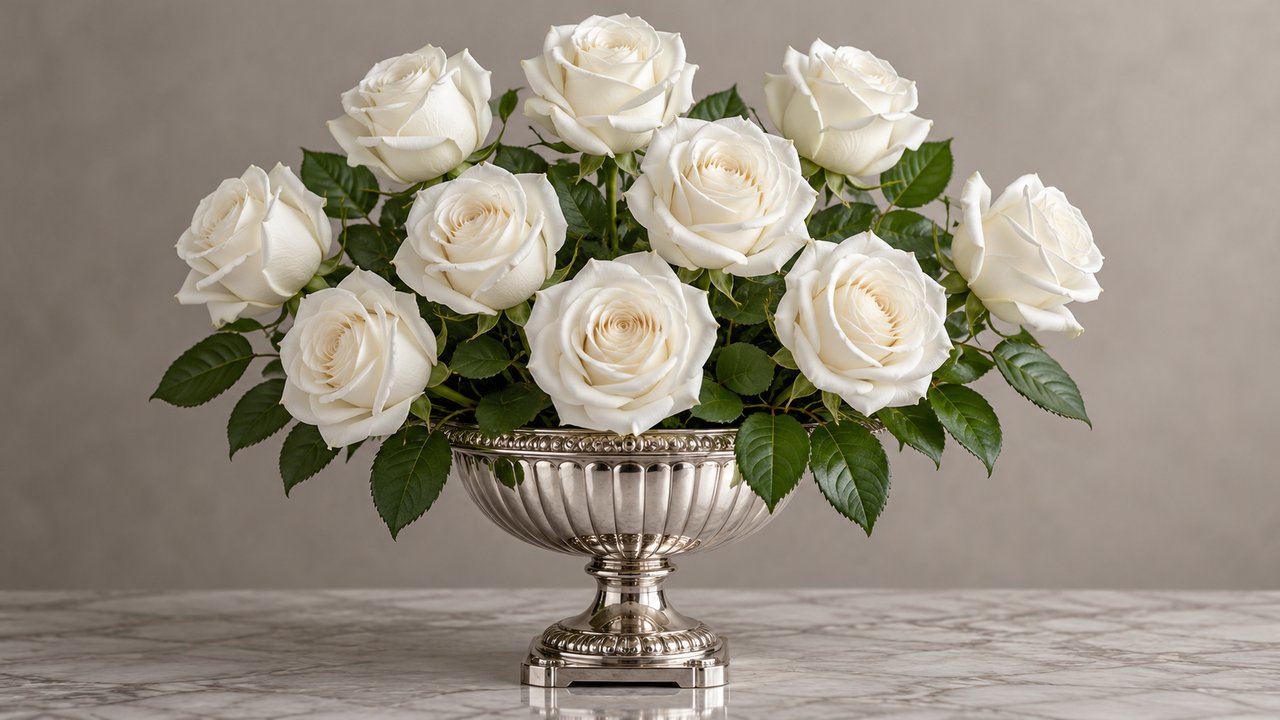
Botanically, roses belong to the genus Rosa, a diverse group of woody perennials with species native mainly to temperate regions of the Northern Hemisphere. Their layered petals, fragrance, prickles, and recurring flowering habits have inspired symbolism for millennia. In a ten-stem arrangement, repetition magnifies the rose’s traditional associations with love, beauty, secrecy, honor, and renewal while preserving an elegant, manageable scale.
The Primary Symbolism of Ten Roses
At its heart, a ten-rose bouquet communicates complete approval. It may praise someone’s character, celebrate the quality of a relationship, or recognize an accomplishment. In romance, its message is usually personal rather than abstract: “To me, you are perfect.” This does not have to imply literal flawlessness. More sensitively interpreted, it means the giver accepts and admires the whole person, imperfections included.
- Perfection: Ten represents a full score and the highest rating.
- Complete admiration: Every rose reinforces appreciation for another quality.
- Confidence in a relationship: The bouquet can indicate satisfaction, harmony, and emotional certainty.
- Approval and congratulations: Ten roses can honor excellent work, a milestone, or a graceful achievement.
- Balanced commitment: The arrangement feels meaningful and intentional without the intensity of a very large declaration.
The number also carries broad symbolic associations with order and completion. Ten fingers underpin the decimal system, while many religious, legal, and philosophical traditions organize important principles into groups of ten. These associations help a ten-rose bouquet feel balanced and definitive. Nevertheless, context matters: the color, card message, relationship, and local custom determine whether “perfection” sounds romantic, familial, professional, or celebratory.
Historical and Cultural Interpretations
Roses represented beauty and desire in the ancient Mediterranean world and were connected with Aphrodite and Venus. Roman banquets used roses as emblems of pleasure, luxury, and confidentiality. In medieval Christian imagery, roses acquired meanings of divine love, martyrdom, purity, and spiritual mystery. Persian literary traditions celebrated the rose as the beloved of the nightingale, making it an enduring image of longing and transcendent beauty.
Victorian flower dictionaries intensified European interest in coded bouquets. Red roses signified passionate love, white roses innocence or reverence, and yellow roses could suggest jealousy in some period sources. Modern meanings have evolved considerably; contemporary yellow rose meaning centers more often on friendship, optimism, and joy. The specific equation of ten roses with perfection is therefore best understood as a modern extension of floriography rather than an immutable Victorian rule.
In contemporary Western gifting, ten roses are often chosen for anniversaries, birthdays, dates, and congratulations. In Chinese cultural contexts, the number ten can suggest fullness or completeness, making the bouquet’s message especially harmonious. Customs vary across East Asia, however, and number symbolism should never be generalized across every community. In some European traditions, even-numbered bouquets may be associated with funerals, while odd numbers are preferred for joyful occasions. Before sending ten roses internationally, consult a florist familiar with the recipient’s local etiquette.
How Color Changes the Message
Quantity supplies the idea of perfection, but color defines what kind of perfection is being praised. Ten red roses communicate romantic perfection, whereas ten pink roses express admiration with greater softness. Mixed bouquets can broaden the message, but too many unrelated colors may weaken its clarity.
| Rose Color | Meaning with Ten Roses | Best Context |
|---|---|---|
| Red | Perfect love, desire, and wholehearted devotion | Partner, anniversary, or romantic declaration |
| Pink | Complete admiration, gratitude, and graceful affection | Friend, mentor, partner, or parent |
| White | Pure esteem, sincerity, and spiritual completeness | Wedding, remembrance, or formal milestone |
| Yellow | Perfect friendship, happiness, and encouragement | Friendship, recovery, or congratulations |
| Champagne | Refined admiration, elegance, and mature appreciation | Engagement, promotion, or sophisticated celebration |
| Lavender | Enchanting perfection and distinctive charm | New romance or an artistic recipient |
White roses can be bridal, spiritual, or commemorative; understanding broader white rose symbolism helps prevent ambiguity. Cream and champagne blooms are warmer and less austere. The nuanced champagne rose meaning combines elegance, celebration, and understated luxury, making ten champagne roses particularly suitable for professional achievements or mature relationships.
When and to Whom Should You Give Ten Roses?
Ten roses suit a new romance once mutual interest is clear, an established partner on an anniversary, or a spouse as an elegant “just because” gift. They can also congratulate a friend who earned a qualification, thank a parent for steadfast support, or recognize a colleague’s outstanding contribution. Pink, yellow, peach, or champagne roses generally work better than red in non-romantic settings.
For a birthday, ten blooms can say “You are wonderful exactly as you are.” For an engagement or wedding, white, blush, and champagne varieties affirm harmony and a bright future. In reconciliation, soft pink or peach roses can express appreciation, but flowers should accompany a sincere apology rather than replace one. For bereavement, the symbolism changes: ten white or muted roses may represent complete respect and enduring remembrance. Consult guidance on roses for sympathy before sending them to a funeral home or grieving family.
Modern etiquette favors clarity. Add a short card such as “Ten roses for a ten-out-of-ten person” if the recipient may not know numerical flower symbolism. Avoid red roses in professional relationships unless romantic intent is appropriate and welcome. Consider fragrance sensitivities, hospital restrictions, pet safety, and whether the recipient has a vase. Send loose-cut flowers to a home, but choose a vase arrangement for an office, hotel, or recovery setting.
Companion Flowers and Bouquet Styling
Ten roses can stand alone in a compact hand-tied bouquet, allowing the numerical message to remain obvious. Spiral the stems so the flower heads form a rounded dome, and use foliage sparingly. Eucalyptus creates a modern, aromatic silhouette; Italian ruscus adds graceful movement; salal provides a fuller, traditional frame.
For romance, combine red roses with waxflower or delicate astrantia rather than overwhelming them with lilies. Blush roses pair beautifully with sweet peas, ranunculus, or lisianthus for a garden-inspired composition. Yellow roses gain freshness from chamomile, solidago, or pale blue delphinium. White roses with rosemary symbolize remembrance, while olive foliage suggests peace. If preserving the exact count matters, keep companion flowers visually subordinate and ensure there are unmistakably ten rose heads.
Care and Vase Longevity
Fresh cut roses commonly last five to ten days, depending on cultivar, maturity, handling, and temperature. Choose stems with firm necks and outer petals beginning to loosen; tightly closed buds may have been harvested too early to open properly. Protective outer “guard petals” may appear bruised or green-edged but shield the inner bloom and can be gently removed.
- Wash the vase thoroughly to reduce bacteria.
- Recut 1–2 centimeters from each stem at a sharp angle with clean shears.
- Remove every leaf that would sit below the waterline.
- Add commercial flower food at the recommended dilution.
- Refresh the water every two days and recut stems when possible.
- Keep roses away from direct sun, radiators, drafts, and ripening fruit, which releases flower-aging ethylene.
Gardeners seeking roses for cutting should select disease-resistant, repeat-flowering cultivars with long stems and good vase performance. Plant in a position receiving at least six hours of sun, with fertile, well-drained soil and adequate air circulation. Water deeply at the base, mulch to moderate soil moisture, and prune according to the rose class rather than applying one method indiscriminately.
A Complete Expression of Admiration
The 10 roses meaning combines the rose’s ancient language of beauty and affection with the modern symbolism of a perfect score. It says, with elegant directness, “You are perfect to me,” “I completely approve,” or “What you have achieved deserves the highest praise.” Color and context refine that statement: red makes it passionate, pink appreciative, yellow joyful, white sincere, and champagne sophisticated.
Thoughtfully chosen, culturally appropriate, and accompanied by a clear personal note, ten roses offer more than visual beauty. They create a balanced, memorable tribute to the recipient as a whole—a declaration of admiration that feels complete without becoming excessive.