Table of Contents
6 Roses Meaning: I Want to Be Yours, Infatuation, and Mutual Need
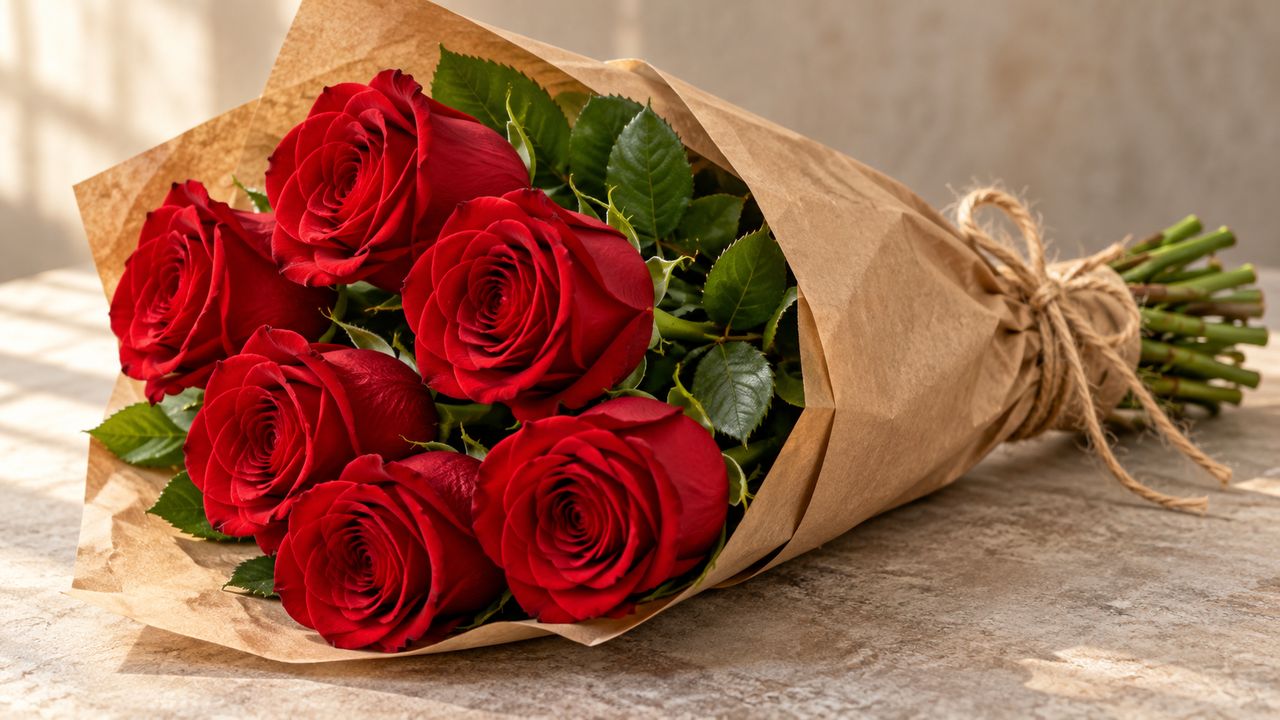
Six roses form a bouquet with an unusually intimate message: “I want to be yours.” They can express infatuation, romantic longing, mutual need, and the desire to move a relationship toward greater closeness. More deliberate than a casual single rose but less ceremonially weighty than a dozen, six blooms occupy an appealing middle ground. They suggest that affection has become serious enough to declare, yet remains personal, spontaneous, and emotionally alive.
The rose has carried symbolic meaning since antiquity. It was associated with Aphrodite and Venus in Greco-Roman culture, appeared in Persian poetry as the beloved companion of the nightingale, and became a symbol of love, secrecy, purity, and sacrifice in medieval Europe. During the nineteenth-century fashion for floriography, flower species, colors, arrangements, and presentation styles were used to communicate sentiments that social convention did not always permit people to say aloud. Exact numerical rose codes were not universally standardized in Victorian dictionaries; many familiar number meanings developed through later commercial floristry, wedding customs, and international gift culture. Today, six roses unite this older symbolic heritage with a clear modern romantic message.
The Primary Meaning of Six Roses
The best-known 6 roses meaning is “I want to be yours.” This is not merely a compliment about beauty. It is a statement of intention: the giver wishes to belong emotionally with the recipient and hopes that the feeling will be welcomed. For that reason, six roses often mark the point between attraction and commitment.
A second interpretation is infatuation. Six roses can convey that someone has captured the giver’s imagination and is occupying their thoughts. Infatuation may sound fleeting, but in floral language it need not be shallow. Here it describes the bright, absorbing stage of romance when admiration, anticipation, and desire are especially intense.
The bouquet can also represent mutual need or cherished interdependence: “I need you, and I value the place we hold in each other’s lives.” This meaning is most appropriate in an established relationship where “need” signifies trust and emotional partnership rather than possession. A thoughtful card can prevent the gesture from sounding demanding—for example, “Life is richer with you beside me.”
Visually, six is also satisfying. Roses commonly produce flowers with five petals in their ancestral single forms, although cultivated varieties may have dozens. Grouping six stems creates a balanced, full arrangement without overwhelming the recipient. Florists can arrange them symmetrically, as three pairs, or asymmetrically with foliage for a more natural garden style.
Meanings Across Eras and Cultures
Ancient cultures gave profound significance to roses, but they did not leave a single, widely accepted code stating that precisely six roses meant romantic possession. The modern interpretation should therefore be understood as an evolving convention rather than an immutable ancient rule. Its power comes from shared contemporary recognition, strengthened by the rose’s long association with desire and devotion.
In Western gift culture, half a dozen roses often indicate affectionate intent while feeling less formal than twelve. In Chinese numerology, six is generally regarded as auspicious and associated with smooth progress or favorable flow. A six-rose gift may consequently suggest a relationship proceeding harmoniously, although color and context still determine whether it is romantic.
Customs differ elsewhere. In several Central and Eastern European traditions, even numbers of flowers are strongly associated with funerals, while odd numbers are preferred for birthdays and romance. A six-rose bouquet could therefore cause discomfort despite the giver’s loving intention. Always consider the recipient’s background; changing the count to five or seven is wiser when local etiquette disfavors even-numbered bouquets.
| Rose Color | Meaning in a Six-Rose Bouquet | Best Occasion |
|---|---|---|
| Red | Passionate love; “I want to be yours” | Romantic declaration or anniversary |
| Pale pink | Tender admiration, sweetness, and gentle affection | New romance or thoughtful surprise |
| Salmon | Enthusiasm, desire, and warm fascination | Flirtation or developing relationship |
| Cream | Charm, grace, thoughtfulness, and refined devotion | Elegant anniversary or engagement gift |
| Yellow | Joy, friendship, optimism, and support | Congratulations or friendship |
| White | Sincerity, new beginnings, and enduring loyalty | Engagement, wedding, or reconciliation |
How Color Changes the Message
Color can intensify, soften, or redirect the numerical meaning. Six scarlet roses are an unmistakable romantic proposition, whereas blush or pale pink roses communicate admiration with less pressure. They are especially suitable when affection is new or when the recipient prefers understated gestures.
Orange-pink and salmon varieties add energy and attraction. The nuanced salmon rose meaning bridges friendliness and passion, making six salmon blooms effective for a relationship that is becoming romantic. Muted mauve-pink blooms feel more nostalgic; the emotional associations of dusty rose colors suit long-term partners, vintage-themed celebrations, and memories of courtship.
Ivory and cream are warmer than stark white. Because cream rose symbolism centers on charm, grace, and consideration, six cream roses can express mature devotion without the intensity of red. Mixed colors should be selected deliberately: three red and three pink roses combine desire with tenderness, while six individually varied roses can celebrate the many dimensions of a relationship.
When and How to Give Six Roses
- Early dating: Give six pink, salmon, or peach roses after several successful dates when you want to express genuine interest without making an outsized declaration.
- Defining the relationship: Six red roses are ideal when asking for exclusivity, provided your words are direct and respectful.
- Anniversaries: Choose the recipient’s favorite color, or echo flowers used at a wedding or memorable first date.
- Reconciliation: Use cream, white, or soft pink roses with an accountable written apology; flowers should support changed behavior, not replace it.
- Friendship and celebration: Six yellow or apricot roses can congratulate a friend, colleague, or relative without strongly romantic implications.
Modern etiquette favors clarity. Include a short card because not everyone knows numerical flower symbolism. Avoid sending six red roses anonymously in professional settings, and do not use an intimate bouquet where there is a power imbalance or where romantic interest has already been declined. Remove price labels, confirm that the recipient is not sensitive to fragrance, and choose responsibly grown flowers when possible.
Companion Flowers and Styling
For a classic arrangement, pair six roses with eucalyptus, myrtle, or Italian ruscus. Myrtle has historical associations with love and marriage, while airy foliage gives each bloom visual space. Baby’s breath creates a soft, traditional effect, but use it sparingly so the six symbolic roses remain countable.
Lisianthus adds elegance and similar vase longevity; waxflower contributes delicate texture; and ranunculus creates a lush, romantic spring bouquet. For a contemporary design, combine roses with sculptural anthuriums, flowering branches, or wispy grasses. Keep companion blooms smaller or visually subordinate. If the number six carries the message, the recipient should be able to identify six principal roses immediately.
Wrap romantic roses in matte paper, linen ribbon, or a reusable cloth rather than glossy cellophane. Red roses become more sophisticated beside burgundy foliage or deep green leaves, while dusty pink and cream varieties benefit from tonal beige, copper, and sage accents.
Care and Botanical Longevity
Roses belong to the genus Rosa in the Rosaceae family. Most florist roses are complex hybrids bred for stem length, flower form, transport durability, and vase performance. Their longevity is influenced by cultivar, harvest stage, temperature, sanitation, and hydration.
- Wash the vase thoroughly to reduce bacteria, then fill it with fresh, room-temperature water and commercial flower food.
- Remove leaves that would sit below the waterline, since submerged foliage decays rapidly.
- Recut one to two centimeters from each stem at a sharp angle with clean shears before placing the roses in water.
- Keep the arrangement away from direct sun, heaters, drafts, and ripening fruit, which releases flower-aging ethylene gas.
- Change the water every one or two days, clean the vase, and recut the stems if their ends become discolored.
Properly conditioned cut roses commonly last five to ten days, with some cultivars lasting longer. Roses grown in the garden prefer abundant sun, fertile but well-drained soil, good air circulation, and deep watering at the root zone. Deadheading encourages repeat-flowering varieties to produce new blooms, although hips should be allowed to develop if they are desired for autumn ornament or wildlife.
A Small Bouquet with a Direct Message
Six roses communicate more than attraction: they express a wish for closeness, reciprocity, and a shared future. Red makes the statement passionate, pink makes it tender, salmon adds excited desire, and cream lends thoughtful grace. Cultural awareness, a carefully chosen color, and a sincere note transform the bouquet from a conventional gift into a personal declaration. When offered with respect, six roses say with beautiful economy, “I want to be yours—and I hope we belong together.”