Table of Contents
Sage Green Rose Meaning: Peaceful Serenity, Healing Thoughts, and Tranquility
The sage green rose meaning centers on peaceful serenity, healing thoughts, emotional balance, and quiet renewal. With its muted blend of green, gray, and silvery herbal tones, this unusual rose feels gentler than bright green flowers and more contemplative than traditional red or pink blooms. It evokes a shaded garden after rain, the soft foliage of culinary sage, and the restorative stillness of nature.
Sage green roses do not possess the same documented Victorian-era vocabulary as red, white, or yellow roses. During the nineteenth-century flourishing of floriography, green flowers generally suggested hope, youth, fertility, abundance, and renewal. The modern sage-green rose inherits those ideas while adding associations shaped by contemporary color psychology: mindfulness, wisdom, stability, reconciliation, and understated sophistication.
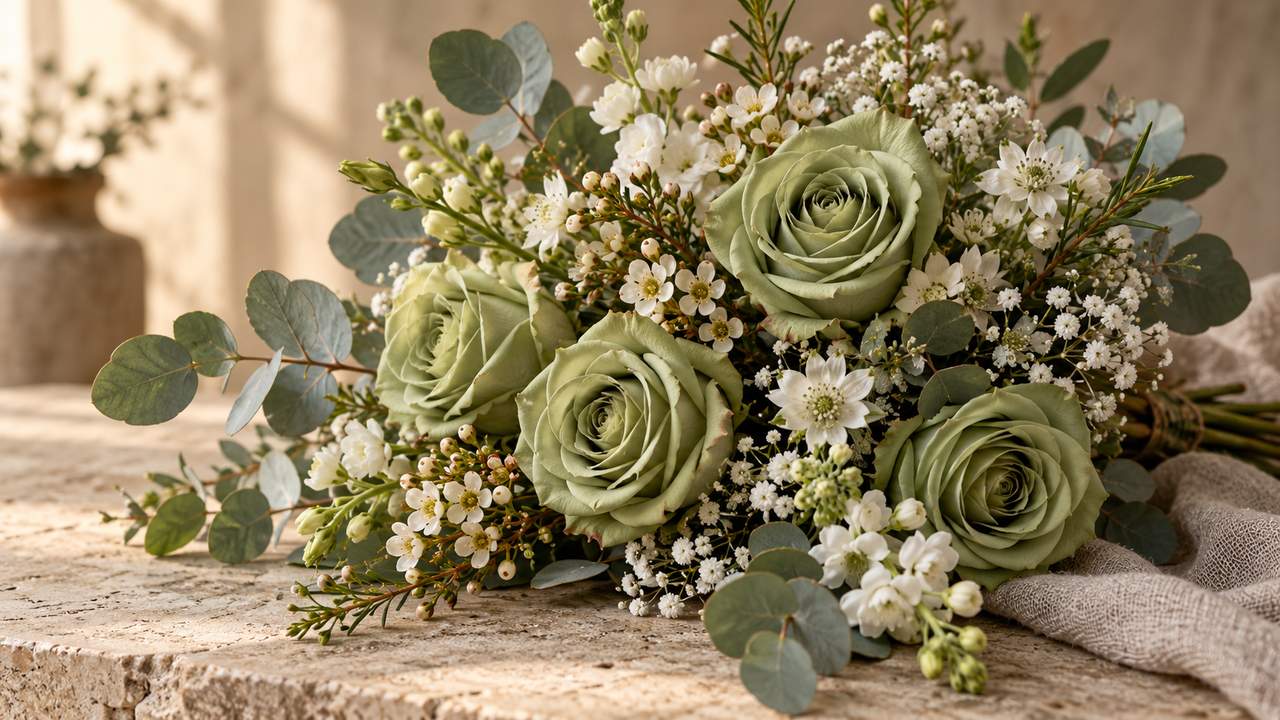
Botanically, roses do not naturally produce petals in a true sage green. Most flowers sold under this name are cream, ivory, or pale green roses enhanced with floral dye, absorption tinting, airbrushing, or preservation treatments. Certain cultivars can display naturally greenish guard petals or celadon undertones, but a uniform gray-green bloom is usually a florist-created color. This artistic origin does not diminish its symbolism; rather, it makes the sage rose a deliberate messenger of calm.
Primary Meanings of Sage Green Roses
The defining symbolism of a sage green rose is tranquility. Unlike vivid green, which can imply vigorous growth or good fortune, sage green communicates restoration at a slower, more reflective pace. It is the color of pausing, breathing, and returning to equilibrium.
- Peace and serenity: Sage green roses express a wish for calm, especially after stress, conflict, illness, or a demanding period of change.
- Healing and restoration: Their herbal coloring recalls medicinal gardens and the historical use of sage as a plant associated with health and preservation.
- Wisdom and thoughtful affection: The word “sage” also means a wise person, lending the flower associations with maturity, sound judgment, and trusted guidance.
- Renewal and steady growth: Green remains the color of living foliage, making these roses suitable for new chapters that unfold gradually rather than dramatically.
- Harmony and reconciliation: Their restrained tone can represent a sincere desire to restore trust without making an overly romantic declaration.
- Refined individuality: Because the color is uncommon, it honors someone with distinctive taste, quiet confidence, or an unconventional spirit.
Historical and Cultural Interpretations
Classical and medieval flower traditions attached deep significance to roses, but meanings were usually organized around familiar red, white, and pink forms. Green petals were rare enough that no consistent ancient interpretation developed. Instead, evergreen foliage, herbs, and spring growth carried the symbolism now associated with green roses: endurance, rebirth, health, and the continuation of life.
In Victorian floriography, roses conveyed carefully coded emotions through species, color, condition, and presentation. Green roses were not a standardized entry in most period dictionaries, so claims that Victorians assigned sage roses one exact message should be treated cautiously. A historically sensitive interpretation combines the rose’s general association with love and confidentiality with green’s broader symbolism of hope and renewal.
Modern Western floral design often uses sage green for wellness, eco-conscious living, minimalist luxury, and nature-inspired weddings. In some East Asian contexts, green may suggest youth, health, vitality, and harmony, although meanings vary widely by region and occasion. In contemporary memorial work, muted green can convey peaceful continuity, but local religious practices and family preferences should always take precedence.
| Sage Rose Variation | Principal Meaning | Best Bouquet Context |
|---|---|---|
| Pale silvery sage | Stillness, reflection, gentle healing | Recovery gifts, remembrance, meditation spaces |
| Warm herbal sage | Wisdom, protection, grounded affection | Mentor gifts, birthdays, housewarmings |
| Blue-gray sage | Composure, trust, emotional clarity | Reconciliation or professional appreciation |
| Sage with cream edges | Hope, sincerity, graceful transition | Weddings, engagements, new beginnings |
| Deep mossy sage | Resilience, stability, connection to nature | Autumn arrangements and milestone gifts |
Shade, Number, and Bouquet Context
Color companions can sharpen or transform the message. Sage and white create a pure, restful arrangement suited to weddings, condolences, or spiritual milestones; understanding white rose symbolism helps distinguish bridal innocence from memorial reverence. Sage with yellow becomes warmer and more sociable, drawing on the yellow rose meaning of friendship, optimism, and joy.
Champagne roses add warmth, celebration, and cultivated elegance without overwhelming sage’s softness. The champagne rose meaning makes this pairing especially effective for engagements, anniversaries, and refined dinner parties. Blush flowers introduce tender romance, while burgundy accents create a moodier composition symbolizing mature devotion and endurance.
The number of stems also affects presentation. A single rose offers a restrained message of support or admiration. Three stems can suggest a balanced past, present, and future; six or twelve feel more generous and celebratory. Because sage roses lack a rigid traditional number code, the accompanying note should explain the sender’s intention when clarity matters.
When and to Whom Should You Give Sage Green Roses?
Sage green roses are particularly appropriate for a person recovering from illness, burnout, grief, or a disruptive life event. They communicate care without the intensity of red roses or the exuberance of brighter colors. They also make thoughtful gifts for therapists, teachers, mentors, gardeners, yoga practitioners, and anyone known for wisdom or a calming presence.
For a housewarming, they wish the recipient harmony and grounded growth. At a wedding, they suit botanical, woodland, minimalist, or heritage-inspired designs and symbolize a peaceful life built together. They are equally fitting for retirement, a career transition, a new home, a wellness milestone, or a gentle apology.
When sending bereavement flowers, use muted sage roses with ivory blooms and restrained foliage. They can represent peace and enduring remembrance, but unusual dyed colors may not suit every family. Consult guidance on roses for sympathy, consider faith and cultural customs, and send funeral pieces through the designated florist when requested.
Modern Etiquette and Message Ideas
Disclose tinting if the recipient values natural or sustainably grown flowers. Dyed roses may release pigment onto water, clothing, or table linens, so florists should package them carefully. Avoid presenting sage roses as a strong romantic declaration unless they are paired with traditionally romantic flowers or a clearly worded card.
Suitable notes include “Wishing you peace and renewed strength,” “Thank you for your steady wisdom,” or “May this new chapter bring balance and beautiful growth.” For reconciliation, acknowledge the issue directly rather than expecting the bouquet to replace a sincere conversation.
Companion Flowers and Styling Advice
Pair sage roses with ivory garden roses, white ranunculus, lisianthus, hellebores, anemones, or delicate sweet peas for layered softness. Eucalyptus, dusty miller, olive branches, rosemary, and actual sage foliage reinforce the botanical palette. For textural contrast, add scabiosa pods, astrantia, waxflower, or airy grasses.
Keep the arrangement loose and asymmetrical so the unusual roses retain their naturalistic character. Matte ceramic vessels, weathered stone, clear ribbed glass, and aged brass complement sage better than highly reflective containers. For weddings, repeat the color through ribbons, foliage, candles, or linens rather than tinting every flower; variation prevents the design from appearing flat or artificial.
Care, Vase Life, and Cultivation
Fresh cut roses generally last five to ten days with attentive care. Recut stems diagonally with clean shears, remove leaves below the waterline, and place the flowers in a sanitized vase containing fresh water and floral preservative. Change the water every two days and keep the arrangement away from direct sun, ripening fruit, heating vents, and strong drafts.
Absorption-dyed stems may color the water and can be more sensitive because tinting sometimes stresses the vascular tissue. Preserved sage roses require no water; display them away from humidity and sunlight, and remove dust gently with cool air. Never place preserved roses in a fresh arrangement’s water.
Gardeners seeking this palette should choose roses described as pale green, cream-green, or celadon rather than expecting a true sage cultivar. Petal color varies with temperature, maturity, soil, and light. Naturally greenish roses require the same fundamentals as other garden roses: abundant sun, fertile well-drained soil, deep watering at the root zone, airflow, and pruning appropriate to their class.
A Quietly Powerful Floral Message
The sage green rose meaning is ultimately one of composed hope: healing without haste, affection without pressure, and renewal rooted in wisdom. Although its exact color is usually created by floral artistry rather than nature, its emotional effect is authentic and distinctive. Chosen thoughtfully, paired with harmonious flowers, and accompanied by a clear message, sage green roses offer a graceful way to say, “May peace return, and may you grow gently into what comes next.”