Table of Contents
Pairing Roses with Waxflower: Subtle Sweetness and Lasting Filler Magic
Few floral pairings balance emotional grandeur and quiet tenderness as gracefully as roses and waxflower. Roses bring centuries of symbolism shaped by classical mythology, Persian poetry, Christian iconography, courtly romance, and Victorian floriography. Waxflower contributes a more modern but equally appealing message: patient affection, enduring happiness, and love that remains steady through time. Together, they create a bouquet that can say, “My feelings are profound, and I intend them to last.”
Botanically, the contrast is just as compelling. Roses belong to the genus Rosa and are admired for layered petals, broad forms, and fragrances ranging from tea-like to richly damask. Waxflower, usually Chamelaucium uncinatum, is an evergreen shrub native to Western Australia. Its wiry stems carry needle-like foliage and clusters of small, five-petaled blooms with a firm, waxy texture. The rose naturally becomes the focal flower, while waxflower supplies movement, fragrance, and a constellation of delicate detail.
What Is the Roses and Waxflower Meaning?
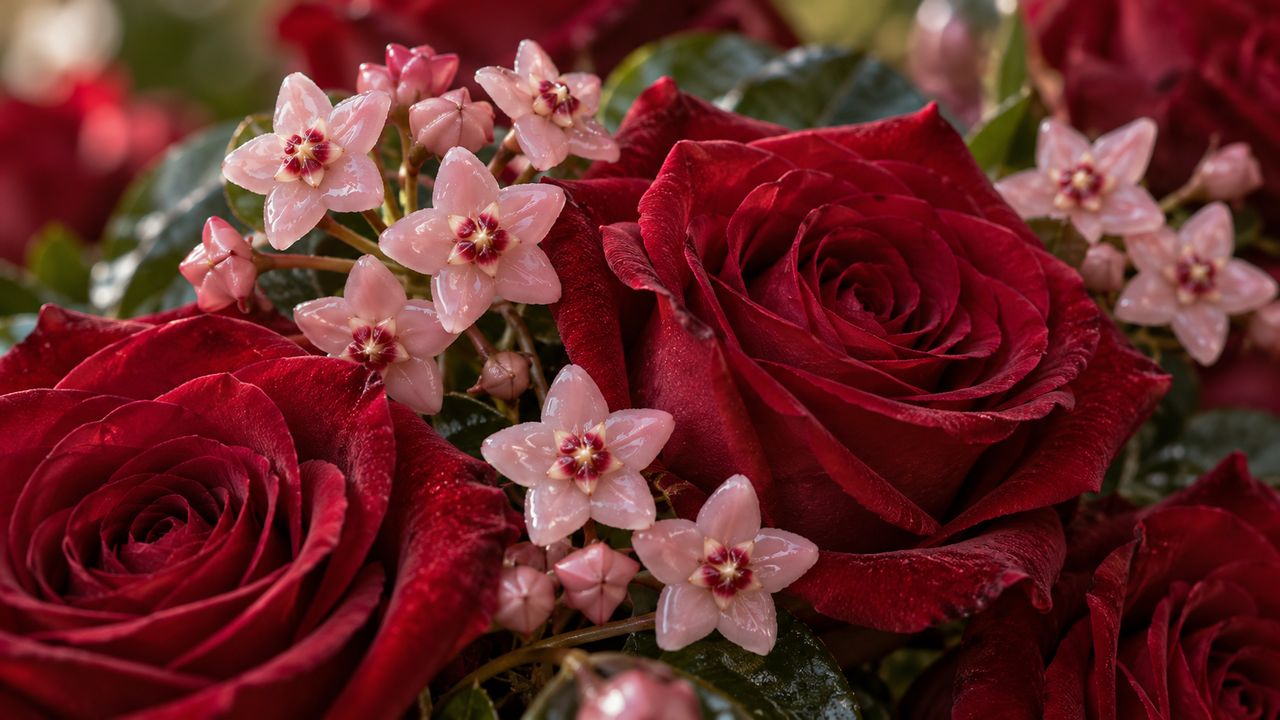
The central roses and waxflower meaning is enduring love expressed with warmth, sweetness, and emotional sincerity. A rose communicates the nature or intensity of the feeling through its color. Waxflower surrounds that declaration with associations of longevity, patience, good fortune, and affection that flourishes through everyday life.
- Lasting romantic devotion: Roses express love, while durable waxflower suggests commitment beyond a dramatic first moment.
- Sweetness without excess: Tiny waxflower blooms soften the formality or intensity of roses, making the arrangement feel intimate and approachable.
- Good fortune in partnership: Waxflower is popular in wedding floristry, where it is commonly associated with a happy, enduring union.
- Admiration supported by loyalty: The pairing can honor a friend, mentor, parent, or partner when the rose color is chosen carefully.
- Beauty strengthened by resilience: Delicate-looking waxflower is remarkably sturdy, giving the bouquet an understated message of perseverance.
Historical and Cultural Layers
Roses acquired symbolic importance long before formal flower dictionaries appeared. In ancient Greek and Roman traditions, they were connected with Aphrodite or Venus, desire, beauty, secrecy, and mortality. The Latin phrase sub rosa, “under the rose,” linked the flower with confidentiality. In medieval and Renaissance Europe, roses also gained religious and dynastic meanings, including Marian purity, martyrdom, and royal authority.
During the nineteenth century, European and American floriography books turned rose colors, stages of bloom, and gestures of presentation into an elaborate social vocabulary. A red rose could declare passionate love; a white rose might signify innocence; a rosebud could suggest youth or affection just beginning. These meanings were never completely standardized, however. Definitions varied among authors, regions, and editions.
Waxflower did not occupy the same established place in early European flower dictionaries. Native to Western Australia and brought into wider ornamental cultivation during the nineteenth century, it gained its familiar symbolism largely through modern floristry. Its long vase life, evergreen character, and abundant small flowers encouraged associations with endurance, lasting success, and steadfast love. In Australian contexts, it can also evoke native landscapes, adaptability, and regional pride.
Contemporary interpretation is more flexible than Victorian code. Western wedding floristry frequently treats waxflower as a sign of enduring partnership, while roses retain color-dependent meanings recognized across many cultures. Customs still matter: white flowers may represent bridal purity in one setting but mourning in another, and red roses can appear overly romantic when sent to a colleague. The recipient’s culture and personal associations should therefore take precedence over any flower dictionary.
Meanings by Rose Color
| Rose and Waxflower Pairing | Combined Meaning | Best Occasion |
|---|---|---|
| Red roses with white waxflower | Passionate, faithful, and lasting love | Anniversary, proposal, romantic milestone |
| Pink roses with blush waxflower | Tender admiration, gratitude, and gentle affection | Birthday, thank-you, new relationship |
| White roses with white waxflower | Sincerity, remembrance, unity, and enduring peace | Wedding, sympathy, memorial |
| Yellow roses with pink waxflower | Cheerful friendship and dependable support | Congratulations, friendship, recovery |
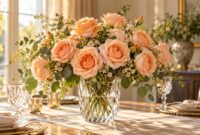
| Peach or cream roses with white waxflower | Thoughtfulness, grace, appreciation, and quiet loyalty | Host gift, professional thanks, family celebration |
| Lavender roses with purple waxflower | Enchantment, fascination, and an uncommon bond | Creative tribute, early romance, special birthday |
Color changes the emotional volume of the arrangement. Cream roses are especially refined with white or pale-pink waxflower; the established language of cream rose symbolism emphasizes charm, grace, and considerate affection. Pink waxflower makes the composition warmer, while white waxflower keeps it restrained and ceremonial.
Novelty roses require additional nuance. Multicolored petals can turn the bouquet into an exuberant tribute to individuality, consistent with the rainbow rose meaning of joy and celebration. Dyed blue roses paired with waxflower suggest steadfast pursuit of the extraordinary, drawing on the blue rose mystery. Very dark roses create a dramatic message of transition or resilience; understanding black rose meaning helps distinguish gothic elegance and rebirth from literal bereavement.
Occasions, Recipients, and Modern Etiquette
For romantic partners, choose red, deep pink, or lavender roses and allow waxflower to communicate permanence. For a newer relationship, blush, peach, or cream avoids the intensity of a dozen red roses. Wedding bouquets benefit from white garden roses and airy waxflower, while anniversary arrangements can echo the couple’s original wedding palette.
For friends, relatives, teachers, hosts, or colleagues, yellow, peach, cream, and soft pink roses are safer than red. A mixed bouquet is suitable for birthdays, graduations, housewarmings, retirements, and messages of thanks. For sympathy, use white or muted blush roses with restrained white waxflower, avoiding excessively festive wrapping unless it reflects the recipient’s tradition.
Modern etiquette favors clarity over secret codes. Include a short card explaining your intention when a color could be misunderstood. Avoid strongly romantic red roses in professional settings, check whether flowers are appropriate in hospitals, and consider fragrance sensitivity. For culturally significant events, ask about customs concerning white flowers, odd or even stem counts, and colors associated with mourning.
Companion Flowers and Styling
Waxflower performs best when it looks like a luminous framework rather than packed filler. Use it around and slightly above the roses to create rhythm, leaving enough negative space for individual sprays to be seen. For a garden style, combine the pairing with ranunculus, lisianthus, sweet peas, or trailing jasmine. Eucalyptus, olive, or ruscus adds cool foliage and structure; stock or freesia contributes fragrance and vertical lift.
For modern arrangements, gather roses in tonal blocks and place waxflower asymmetrically along the edges. A romantic hand-tied bouquet can mix blush roses, white waxflower, and airy grasses. A rustic design suits peach roses, terracotta accents, and Australian foliage. Limit the palette to two or three principal colors when elegance is the goal; multicolored roses already provide visual complexity and need simpler companions.
Care, Longevity, and Cultivation
Condition both flowers promptly. Remove foliage that would sit below the waterline, recut stems at an angle with clean, sharp tools, and place them in a sanitized vase filled with fresh water and floral preservative. Roses are prone to bacterial blockage, so refresh the water every one or two days and recut the stems if they begin to droop. Keep the bouquet away from direct sun, heaters, drafts, and ripening fruit, whose ethylene gas accelerates aging.
Waxflower often lasts seven to fourteen days, sometimes outliving the roses. Its woody stems benefit from a firm angled cut; very thick stems may be lightly split, though crushing them can encourage decay. Remove spent flowers as they brown. Some varieties shed pollen or petals near the end of their display, so protect delicate table linens.
Gardeners should treat waxflower as a sun-loving, drought-tolerant shrub that demands excellent drainage. It performs best in climates resembling Mediterranean or southwestern Australian conditions and resents waterlogged soil. Roses generally prefer rich, well-drained soil, good air circulation, regular deep watering, and at least six hours of sun. Their different moisture needs make them easier to unite in a vase than in the same garden bed.
A Message with Depth and Staying Power
Roses provide the declaration; waxflower supplies the promise beneath it. Whether the bouquet celebrates romance, friendship, gratitude, remembrance, or a new beginning, its meaning comes from the conversation between bold, layered roses and resilient, starry filler. Choose the rose color for the emotion, select waxflower to harmonize or contrast, and accompany the gift with honest words. The result is not merely beautiful: it is a nuanced expression of affection intended to endure.