Table of Contents
50 Roses Meaning: Unconditional Love, Golden Anniversaries, and Pure Splendor
Few floral gifts make an entrance like fifty roses. Abundant, fragrant, and visually commanding, such a bouquet transforms the rose from a single romantic gesture into a declaration. The central 50 roses meaning is unconditional love: affection so complete that it is offered without reservation, limitation, or regret. Fifty roses can also celebrate fifty years of marriage, symbolize extraordinary generosity, or honor a relationship that has reached a moment of exceptional importance.
The symbolism combines ancient reverence for the rose with more recent customs surrounding bouquet numbers. Roses were associated with love, beauty, secrecy, and divinity in Greek, Roman, Persian, and later European traditions. During the nineteenth-century enthusiasm for floriography, flower species, colors, and presentation styles became tools for expressing sentiments that social convention discouraged people from stating directly. However, strict meanings for exact quantities—such as fifty roses—are largely products of modern floristry rather than a single universal Victorian code.
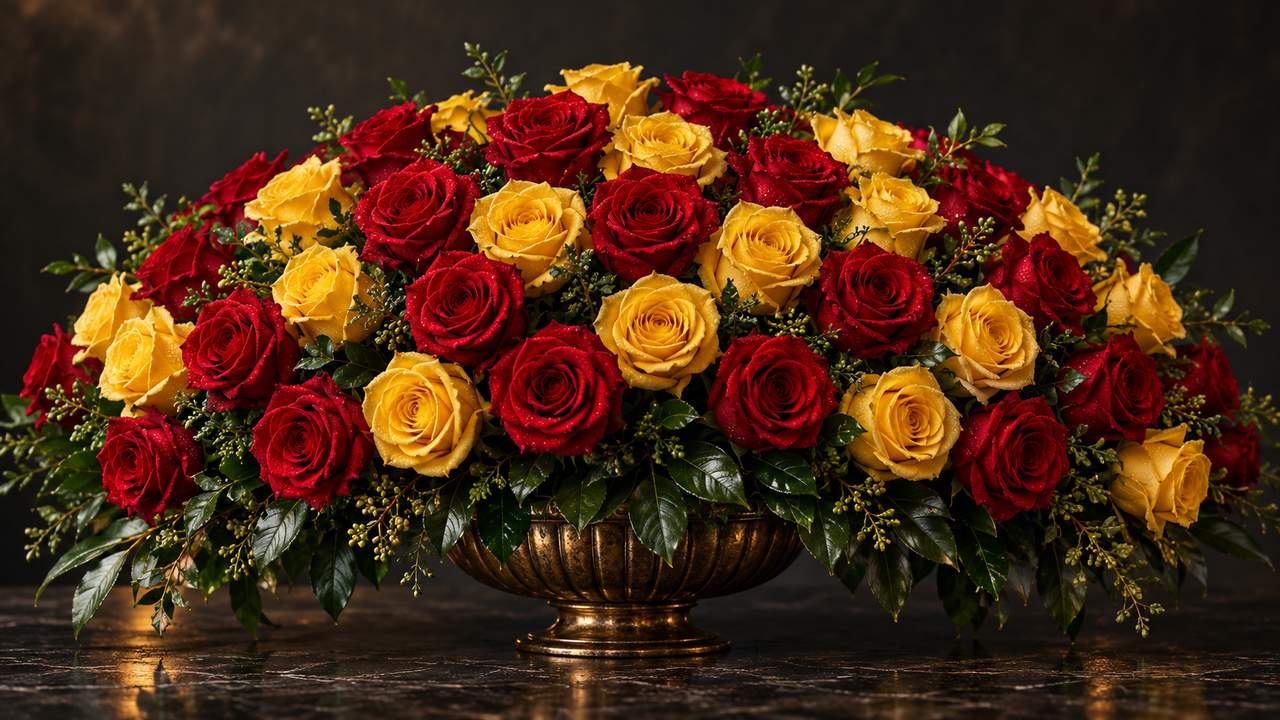
Botanically, a fifty-rose arrangement has symbolism built into its physical form. Roses belong to the genus Rosa, a diverse group of woody perennials prized for layered petals, fragrance, and repeat flowering. When fifty cut stems are gathered together, their overlapping blooms create an impression of fullness and continuity. That visual abundance reinforces the message: “My love is complete, enduring, and beyond measure.”
The Primary Meaning of 50 Roses
In contemporary floral language, fifty roses most commonly mean unconditional love. Unlike a smaller bouquet that may express attraction, admiration, gratitude, or early romance, fifty blooms convey emotional certainty. The giver is not merely interested; they are making a substantial statement about devotion and commitment.
Another frequently quoted interpretation is “a love without regrets.” This meaning suits couples who have shared challenges, reconciled after hardship, or consciously chosen a future together. The number also carries a sense of completeness: five represents balance and human experience in many symbolic systems, while ten suggests fulfillment. Multiplied into fifty, these ideas become an emphatic expression of wholeness and abundance.
Fifty roses are especially significant for a golden wedding anniversary. The fiftieth anniversary has been associated with gold in European anniversary traditions for centuries, with stronger popular standardization in the nineteenth and twentieth centuries. Gold represents value, resilience, wisdom, and a bond refined by time. Fifty roses—particularly yellow, cream, white, or gold-toned varieties—translate that milestone into living flowers.
Historical and Cultural Interpretations
In the ancient Mediterranean world, roses were linked with Aphrodite and Venus, goddesses of love and beauty. Romans used roses in celebrations, banquets, funerary rites, and private chambers. The flower could therefore represent sensual pleasure, transience, honor, or secrecy. The phrase sub rosa, meaning “under the rose,” eventually came to denote confidentiality.
Medieval and Renaissance symbolism expanded the rose’s associations to include spiritual love, martyrdom, purity, dynastic identity, and the Virgin Mary. By the Victorian era, illustrated flower dictionaries encouraged lovers and friends to communicate through carefully selected blooms. Color, condition, and even the direction in which a flower was presented could alter the perceived message.
Modern Western floristry usually interprets fifty red roses as an extravagant romantic declaration. In China, large red floral displays are auspicious because red suggests happiness, prosperity, and celebration, though local preferences concerning number symbolism should still be considered. In Japan, presentation, restraint, seasonality, and the recipient’s circumstances can matter as much as numerical meaning. Across cultures, fifty roses are rarely viewed as casual: scale makes the bouquet ceremonial, luxurious, and emotionally weighty.
| Rose Choice | Meaning in a 50-Rose Bouquet | Best Occasion | Ideal Recipient |
|---|---|---|---|
| Red | Unconditional romantic love and desire | Proposal, anniversary, major declaration | Spouse or committed partner |
| White | Pure devotion, unity, remembrance | Wedding, memorial, vow renewal | Partner, family, or honoree |
| Pink | Abundant admiration, tenderness, gratitude | Birthday, appreciation, family milestone | Partner, parent, mentor, or friend |
| Yellow or Gold | Joy, loyalty, prosperity, golden memories | Fiftieth anniversary or achievement | Long-married couple, friend, or colleague |
| Mixed Colors | A multifaceted relationship or shared life | Celebration, reunion, tribute | Couple, family member, or community figure |
How Color Changes the Message
Color should refine the meaning rather than merely match the room. Fifty crimson roses are passionate and unmistakably romantic, while soft blush roses emphasize admiration and emotional tenderness. White roses create a more solemn or ceremonial effect; combined with greenery, they suit weddings, spiritual occasions, and elegant memorial tributes.
Less conventional shades can make the arrangement more personal. Apricot blooms communicate welcome and affectionate warmth; a fuller discussion of apricot rose meaning helps explain why they work beautifully for hosts, parents, or enduring friendships. Salmon roses blend enthusiasm with warmth, making the salmon rose meaning appropriate for relationships that unite friendship and passion.
Mauve and lavender tones suggest enchantment, rarity, and sophisticated affection. Their association with luxury is explored through mauve rose symbolism. Mint green roses—usually dyed or tinted rather than naturally green in the familiar pastel sense—evoke renewal, equilibrium, and good fortune. The mint green rose significance makes them an imaginative choice for a new home, business success, or contemporary anniversary design.
When and How to Give Fifty Roses
- Golden anniversary: Choose yellow, cream, or warm peach roses, perhaps with a restrained gold ribbon.
- Marriage proposal: Red roses offer dramatic certainty, but only when such a public or lavish gesture suits the recipient.
- Milestone birthday: Pink, apricot, yellow, or mixed roses celebrate the person without implying romance.
- Vow renewal: Combine the couple’s wedding colors with roses that echo their original bouquet.
- Major gratitude gesture: Use soft pink or mixed garden roses for a parent, mentor, benefactor, or community leader.
Modern etiquette requires sensitivity to scale. Fifty roses may overwhelm a new romantic interest, create pressure after conflict, or be impractical at a workplace. Confirm that the recipient has space for a large arrangement and no fragrance sensitivity. For hospitals, care homes, hotels, or offices, check delivery policies and request a vase-ready design. A private delivery is often more considerate than a public spectacle.
Include a card that explains your intention, especially when the bouquet is not romantic. A simple message such as “Fifty roses for fifty remarkable years” prevents ambiguity. Avoid using an expensive arrangement as a substitute for an apology; accountability should accompany the flowers.
Companion Flowers and Styling
Because fifty roses already provide considerable volume, companion flowers should support rather than compete. Waxflower, limonium, or astrantia adds a delicate haze; lisianthus contributes soft movement; and eucalyptus, olive, or Italian ruscus supplies structure. For a romantic garden style, mix roses at different stages of opening and add trailing greenery. For formal luxury, use one rose variety, keep stems at an even height, and limit foliage.
A compact dome emphasizes abundance, while a wide, asymmetrical arrangement feels more natural and contemporary. For a golden anniversary, avoid excessive metallic spray or glitter. Champagne-colored ribbon, amber glass, brass details, or a few golden-toned leaves create a more refined effect.
Care and Vase Longevity
Fifty roses drink heavily, so place them in a stable, generously sized vase. Clean the vessel thoroughly, add commercial flower food, and remove all foliage that would sit below the waterline. Recut one to two centimeters from each stem at an angle with a clean, sharp knife or floral snips, then place the roses in water promptly.
Keep the bouquet away from direct sunlight, radiators, drafts, and ripening fruit, which releases ethylene gas and hastens aging. Check the water daily, top it up generously, and replace it every two days if possible. Remove faded outer petals and declining blooms before decay affects neighboring flowers. With fresh stems and attentive care, many modern cut-rose cultivars remain attractive for five to ten days.
A Declaration Made Visible
The enduring 50 roses meaning is love expressed without half measures. Whether honoring unconditional devotion, five decades of marriage, profound gratitude, or a life richly shared, the bouquet communicates fullness through both number and form. Its success depends on choosing a color that suits the relationship, presenting it with cultural and practical sensitivity, and accompanying its splendor with sincere words. Fifty roses are not simply more flowers; thoughtfully given, they become a living monument to affection, memory, and commitment.