Table of Contents
15 Roses Meaning: Sincere Apology, I Am Deeply Sorry, and Rebuilding Trust
The traditional 15 roses meaning is a sincere apology: “I am deeply sorry.” More than an admission of error, a bouquet of fifteen roses expresses remorse, affection, and a genuine desire to repair a valued relationship. It is especially appropriate when ordinary words feel inadequate, yet the giver wants to accept responsibility without overwhelming the recipient with a grand romantic spectacle.
Roses have carried emotional messages since antiquity. In Greek and Roman traditions, they were associated with Aphrodite or Venus, beauty, desire, secrecy, and the fragile nature of love. During the nineteenth-century flourishing of floriography—particularly in Britain, France, and the United States—flowers, colors, arrangements, and even presentation methods became a coded social vocabulary. Number symbolism later added another layer. Although historical flower dictionaries did not always agree on exact numerical definitions, modern floristry has established fifteen roses as one of the clearest bouquet counts for contrition and reconciliation.
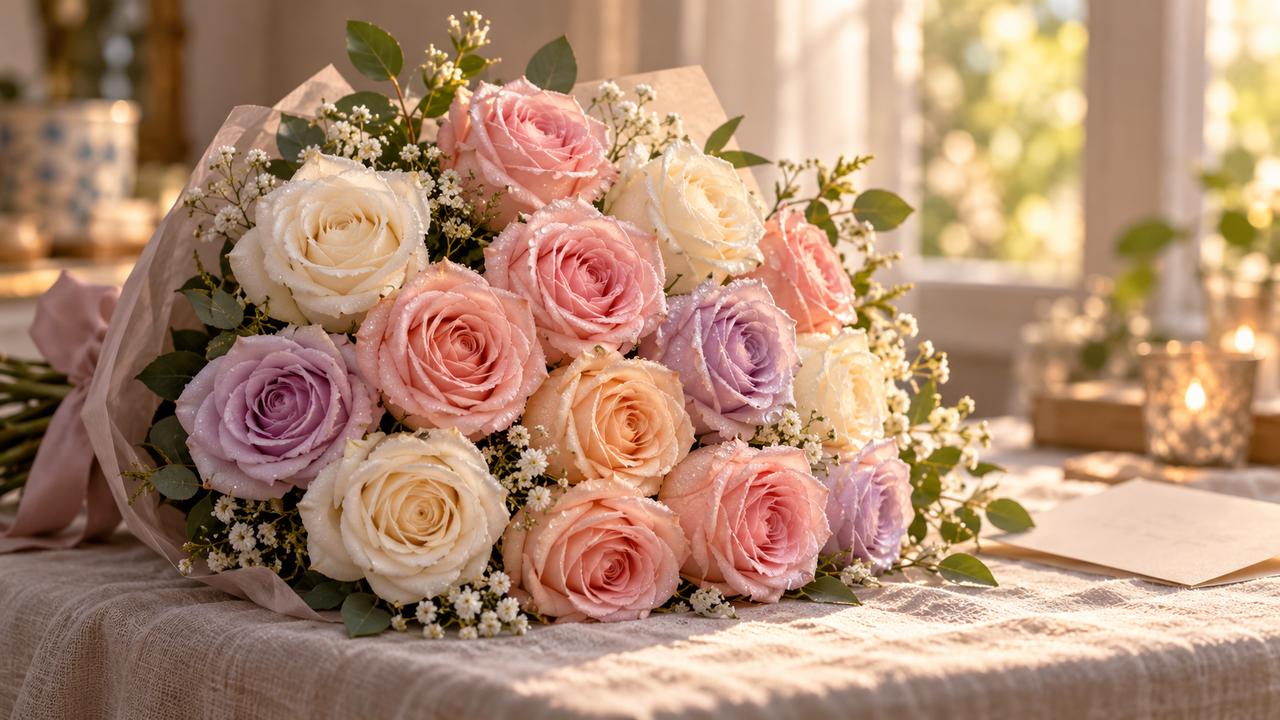
Botanically, roses belong to the genus Rosa in the Rosaceae family. Their layered petals make them unusually apt symbols of complicated emotions: hurt, tenderness, regret, hope, and renewed intimacy can coexist within one bloom. Fifteen stems amplify that message while retaining a graceful, personal scale.
The Primary Symbolism of Fifteen Roses
At its heart, a fifteen-rose bouquet says, “I recognize that I hurt you, I regret it, and I hope we can rebuild.” Its symbolism can be understood through several connected ideas:
- Sincere apology: The bouquet acknowledges wrongdoing rather than trying to distract from it.
- Remorse with affection: Roses communicate that the apology comes from someone who deeply values the recipient.
- A request for forgiveness: Fifteen roses open the door to reconciliation but should never demand an immediate response.
- Commitment to repair: The generous stem count suggests effort, seriousness, and willingness to make amends.
- Renewed trust: Fresh flowers represent the possibility of a healthier new chapter after conflict.
The number fifteen also occupies a useful symbolic middle ground. It is more deliberate than a casual handful of roses but less theatrical than several dozen. For this reason, it communicates emotional weight without turning an apology into a public performance. Its effectiveness, however, depends on conduct: flowers can support accountability, but they cannot substitute for changed behavior.
Historical and Cultural Interpretations
In classical culture, the rose represented both love and confidentiality. The Latin expression sub rosa, meaning “under the rose,” came to denote secrecy or discretion. Within an apology, that association can suggest a private, respectful conversation rather than public embarrassment.
Victorian floriography made bouquets particularly useful when social conventions restricted direct emotional speech. Red roses declared ardent love, white flowers suggested innocence, and pink conveyed gentler admiration. Numerical meanings were less standardized than color meanings, but the era helped establish the broader idea that the composition of a bouquet could carry a precise message.
Contemporary Western and international floristry commonly interprets fifteen roses as “I am sorry” or “Please forgive me.” Nevertheless, customs vary. In some East Asian settings, number symbolism is strongly influenced by pronunciation and local belief, while European traditions may focus more heavily on whether the number of flowers is odd or even. In countries where even-numbered bouquets are associated with funerals, fifteen has the practical advantage of being an odd number. A recipient’s personal and cultural associations should always take precedence over a generalized floral code.
How Rose Color Changes the Message
The stem count establishes apology as the central message, while color explains the nature of the relationship and the emotional tone. Choose shades intentionally rather than relying on red by default.
| Rose color | Meaning within a 15-rose bouquet | Best suited to |
|---|---|---|
| Red | Deep romantic remorse and enduring love | Spouse or romantic partner |
| Pink | Gentle regret, gratitude, and appreciation | Partner, friend, or relative |
| White | Honesty, humility, and a peaceful new beginning | Family, partner, or formal relationship |
| Yellow | Friendship, optimism, and restored warmth | Friend or colleague |
| Peach or apricot | Sincerity, warmth, tact, and thoughtful affection | Friend, host, relative, or partner |
| Lavender or mauve | Fascination, tenderness, and exceptional regard | Romantic partner |
Apricot roses soften an apology with hospitality and emotional generosity; exploring the apricot rose meaning is helpful when the desired tone is warm rather than intensely romantic. Mauve varieties lend rarity and refinement, while mauve rose symbolism can add admiration to a romantic reconciliation.
For a contemporary arrangement, pale green or tinted roses suggest equilibrium and fresh prospects. The mint green rose significance makes this shade suitable when the emphasis is harmony after disagreement. Salmon roses blend friendly warmth with restrained passion; understanding the salmon rose meaning can help bridge affection and friendship in a nuanced apology.
When and to Whom Should You Give Fifteen Roses?
Give fifteen roses after a meaningful argument, a thoughtless remark, a forgotten occasion, a breach of confidence, or a period of neglect—provided the flowers accompany a direct and honest apology. They may be offered to a spouse, partner, close friend, parent, sibling, or another person with whom emotional trust matters.
In a professional setting, roses require greater caution because they are often read as romantic. For a colleague, mentor, or client, yellow, cream, or peach roses in an open, garden-style arrangement are safer than red. A neutral seasonal bouquet may be more appropriate where workplace policies, power differences, or personal boundaries make roses uncomfortable.
Modern etiquette favors private delivery. Presenting an apology bouquet before an audience can pressure the recipient to forgive. Include a short handwritten note that names the harm without excuses, such as: “I am sincerely sorry for breaking your trust. I understand why you were hurt, and I am committed to making this right.” Avoid messages that shift blame or request instant absolution.
Do not send flowers when the recipient has requested no contact. Likewise, serious betrayal, repeated misconduct, or abuse cannot be resolved by a bouquet. In such circumstances, respecting boundaries, making restitution, seeking professional help, and demonstrating sustained change are more meaningful than symbolism.
Companion Flowers and Bouquet Styling
A skilled florist can preserve the visual importance of all fifteen roses while using companion flowers to refine the message. White lisianthus adds sincerity and calm; freesias contribute trust and thoughtfulness; chamomile suggests peace; and forget-me-nots reinforce remembrance and loyalty. Baby’s breath creates airy delicacy, though it may feel overly bridal in romantic arrangements.
For a serious apology, choose a hand-tied bouquet with restrained foliage such as eucalyptus, olive, or ruscus. Olive branches are especially resonant as emblems of peace. Avoid excessive glitter, novelty ornaments, or extravagant packaging, which can make the gesture seem performative. Natural paper, silk ribbon, and a simple card keep attention on the message.
A monochromatic bouquet feels focused and unequivocal. A blend of white and blush communicates humility with affection, while red and white combines love with honest intentions. For friendship, yellow roses with cream lisianthus create warmth without an unintended declaration of passion.
Botanical Care and Vase Longevity
Fresh-cut roses generally last five to ten days, depending on cultivar, harvest stage, temperature, and care. Unwrap the bouquet promptly and wash the vase to reduce bacterial growth. Using clean shears, remove one to two centimeters from each stem at a 45-degree angle. Strip away all foliage that would sit below the waterline, because submerged leaves decay rapidly.
Fill the vase with fresh, room-temperature water and commercial flower food. Recut the stems and replace the water every two days. Keep roses away from direct sun, radiators, drafts, and ripening fruit; fruit releases ethylene gas, which accelerates aging. If a rose bends just beneath the flower head, recut its stem and hydrate it separately in deep water for several hours.
Gardeners wishing to grow apology-worthy roses should provide at least six hours of sunlight, fertile but well-drained soil, and steady deep watering at the root zone. Good air circulation helps prevent black spot and powdery mildew. Repeat-flowering hybrid teas produce elegant cutting stems, while floribundas offer abundant clusters and old garden roses contribute fragrance and historical character.
A Gesture of Remorse and Renewal
The enduring 15 roses meaning combines sincere apology, profound regret, and hope for restored trust. Color, presentation, cultural context, and the recipient’s preferences all shape the finer message, but the bouquet’s central purpose remains consistent: to acknowledge hurt with humility and care.
Fifteen roses are most powerful when they are not treated as a shortcut to forgiveness. Accompanied by specific words, respectful timing, patient listening, and visible change, they become a living emblem of reconciliation—beautiful not merely because they bloom, but because they represent the difficult and worthwhile work of beginning again.