Table of Contents
Abracadabra Rose Meaning: Unpredictable Magic, Wonder, and Spontaneous Charm
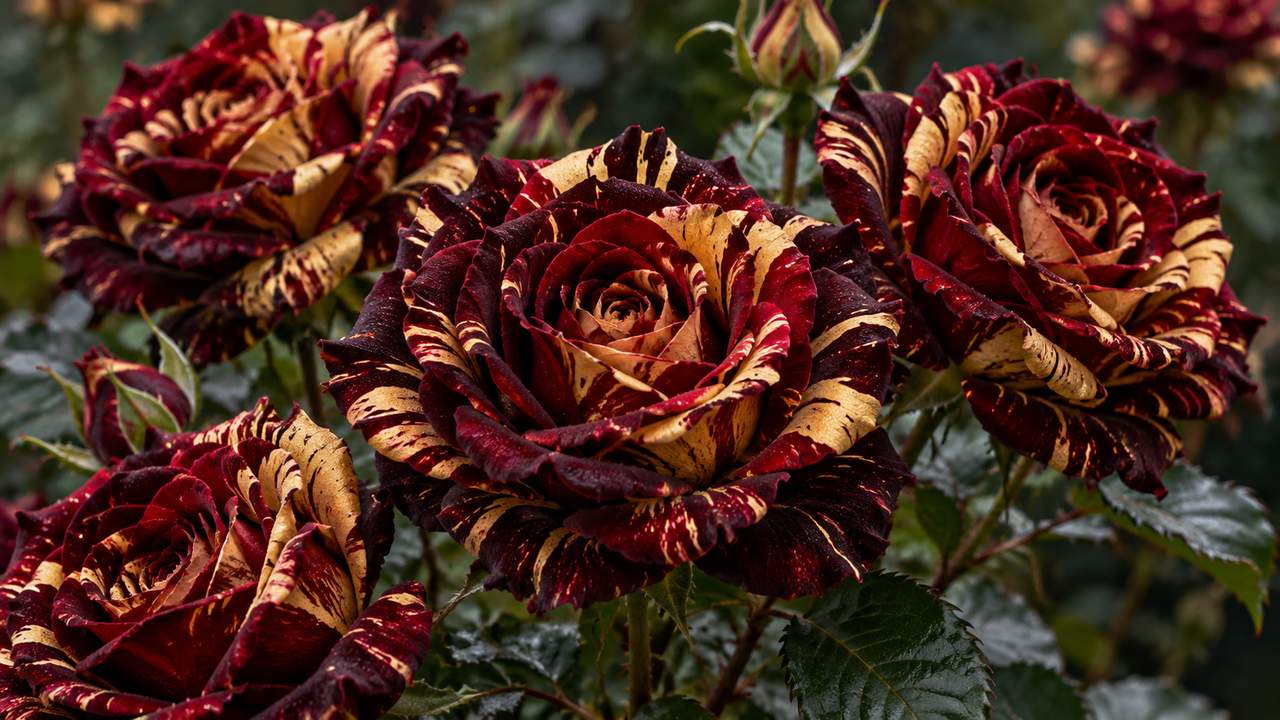
The Abracadabra rose looks as though a florist whispered an incantation over an ordinary bloom. Its velvety petals are typically dark burgundy, crimson, or nearly chocolate-red, interrupted by irregular flashes of golden yellow, cream, or pale pink. Because no two flowers display precisely the same pattern, the rose has become a natural emblem of unpredictable magic, individuality, wonder, and spontaneous charm.
Botanically, “Abracadabra” has been applied to more than one rose introduction, so plants sold under the name may differ slightly by breeder and market. The best-known modern Abracadabra is a striped hybrid tea associated with German breeder Kordes and introduced in the early twenty-first century, often described as a sport or mutation related to the similarly dramatic ‘Hocus Pocus’. It produces high-centered blooms whose unstable pigmentation creates stripes, splashes, and occasional reversions to nearly solid colors.
Unlike ancient species roses or the celebrated red and white roses of European history, Abracadabra has no authentic Victorian-era dictionary definition. Its symbolism is a modern interpretation built from its name, coloring, growth habit, and visual surprise. That distinction makes its message especially flexible: it belongs less to rigid tradition than to the living, evolving language of flowers.
Primary Abracadabra Rose Meaning
The central abracadabra rose meaning is enchantment through the unexpected. The bloom suggests that beauty need not be orderly or predictable. Its markings can change from petal to petal and flower to flower, turning each stem into a singular event. In a bouquet, it can say, “You continually surprise me,” “Life with you is an adventure,” or “Your individuality is your magic.”
- Unpredictable magic: The shifting stripes evoke transformation, coincidence, and delightful turns of fate.
- Wonder and curiosity: Its unusual pattern invites a second look, making it a symbol of imagination and discovery.
- Spontaneous attraction: Deep red petals retain the romantic energy of the red rose, while golden flashes make that passion playful rather than solemn.
- Individuality: Since every bloom is visually distinct, Abracadabra honors someone who resists categories or follows an unconventional path.
- Creative courage: Its bold contrasts suit artists, performers, entrepreneurs, and anyone beginning an inventive undertaking.
- Transformation: Variable coloration can represent reinvention, resilience, and the surprising possibilities hidden within change.
Symbolism Across Eras and Traditions
In classical and medieval symbolism, roses represented love, secrecy, beauty, mortality, and sacred mystery. A striped rose did not possess one universally recognized meaning, although unusual coloring could be read as a marvel of nature. During the nineteenth-century fashion for floriography, messages depended on species, color, condition, and presentation. Variegated roses sometimes suggested mixed feelings, refusal, or difference, but meanings varied sharply between published flower dictionaries.
Abracadabra itself is modern, yet it draws imaginatively on these older traditions. Its wine-red ground recalls devotion and desire; yellow or gold markings introduce friendship, optimism, intellect, and good fortune. Together they create a message of affection enlivened by surprise. Contemporary florists also connect its theatrical name with stage magic, manifestation, and the power of words to alter perception.
Cultural context matters. In many Western settings, dark red roses read as romantic, while yellow signifies warmth and friendship. In parts of East Asia, red is auspicious and celebratory, and gold suggests prosperity, making Abracadabra particularly suitable for congratulations and New Year arrangements. In settings where yellow flowers have associations with separation, jealousy, or mourning, a clear card can prevent ambiguity. No floral meaning is completely universal.
| Feature or Context | Suggested Meaning | Best Message |
|---|---|---|
| Burgundy with gold streaks | Passionate wonder, prosperity, dramatic attraction | “You make life extraordinary.” |
| Red-dominant bloom | Love, desire, devotion with an unconventional spirit | “My love for you still surprises me.” |
| Yellow-dominant bloom | Joy, friendship, optimism, fortunate change | “Wonderful things are ahead.” |
| Mixed-pattern bouquet | Multiplicity, creativity, joyful unpredictability | “Never lose what makes you unique.” |
| Single sculptural stem | Fascination, rarity, focused admiration | “You are one of a kind.” |
Color Variations and Related Rose Meanings
A flower with broad golden bands feels brighter and more celebratory; one dominated by near-black burgundy appears mysterious, sensual, and introspective. Cream-colored streaks soften the drama and add gratitude and refinement, qualities also found in cream rose symbolism. Pale pink markings can introduce sweetness, admiration, or budding affection.
Abracadabra should not be confused with artificially dyed multicolored roses. The rainbow rose meaning centers more strongly on diversity, exuberance, and inclusive celebration, while Abracadabra’s natural-looking irregularity conveys mystery and chance. It shares imaginative territory with the blue rose mystery, although blue roses commonly symbolize the impossible or unattainable. Its dark petals may also recall the black rose meaning, but Abracadabra is generally more playful and life-affirming than mournful.
When and to Whom Should You Give Abracadabra Roses?
These roses excel when the occasion involves surprise, reinvention, or creative achievement. Give them for a first date with someone adventurous, an unconventional anniversary, a theatrical opening, a book launch, a promotion, a graduation, or the beginning of a new venture. They are also memorable birthday flowers for a magician, gardener, designer, performer, fantasy enthusiast, or anyone who dislikes predictable bouquets.
For romance, explain the intention rather than assuming the recipient knows the symbolism. A note such as “You bring wonder into my life” turns the dramatic bloom into a tender declaration. For friendship or professional congratulations, combine it with yellow, cream, or green flowers to reduce the emphasis on passion. Avoid sending an intensely dark arrangement to a bereaved person unless you know their taste; its theatrical appearance may feel celebratory rather than consoling.
Modern etiquette favors sensitivity over numerical rules. One rose communicates fascination, three can express an intimate “I love you,” and a generous group creates spectacle, but the card carries more authority than stem count. Check for fragrance sensitivities, pet safety, workplace restrictions, and cultural color customs. If gifting a living plant, confirm that the recipient has sunny outdoor space and enjoys plant care.
Companion Flowers and Bouquet Styling
Let Abracadabra remain the focal flower. Pair it with cream spray roses, ivory lisianthus, white ranunculus, or pale carnations for elegant contrast. Gold yarrow, solidago, or craspedia amplifies its warm streaks, while burgundy dahlias and chocolate cosmos deepen its moody richness. Eucalyptus, ruscus, olive foliage, or copper beech provides structure without competing with the striped petals.
For romance, use five to nine Abracadabra roses with wine-colored foliage and a restrained cream accent. For a modern celebration, add golden flowers and airy grasses in an asymmetrical hand-tied design. For a mystical arrangement, combine dark foliage, trailing amaranthus, and a few sculptural branches. Matte black, amber, brass, or clear glass vessels are more effective than highly patterned containers, which can make the composition visually restless.
Botanical Care and Vase Longevity
As a hybrid tea type, Abracadabra generally prefers full sun, fertile well-drained soil, consistent moisture, and good air circulation. Color expression may vary with temperature, light, plant maturity, and the particular clone sold under the name. Occasional nearly solid red or yellow flowers are part of its unstable sporting character rather than necessarily a sign of poor health.
For cut stems, use a clean vase and fresh lukewarm water with commercial flower food. Remove all leaves below the waterline, recut one to two centimeters from each stem at an angle, and keep the arrangement away from direct sun, heaters, ripening fruit, and strong drafts. Refresh the water every two days and remove fading petals promptly. Properly conditioned stems commonly remain attractive for about five to eight days, though freshness at purchase is decisive.
A Rose for Beautiful Surprises
The abracadabra rose meaning is ultimately an invitation to welcome the unplanned. Its dramatic red-and-gold petals unite passion with playfulness, distinction with change, and elegance with a touch of theatrical wonder. Whether offered to a lover, friend, creative collaborator, or courageous beginner, it celebrates the person who makes ordinary life feel enchanted. With a thoughtful note and carefully chosen companions, this remarkable rose says something both simple and profound: the most memorable beauty is often the beauty we could not predict.